> ...dragging 2 tons of car along with you just to go get groceries is a little bit like paying $5 for single day of cable TV even though all you watched that day was two minutes of the weather channel...
If only humanity would start to realize this, that would alone help to save us from the coming climate catastrophe.
By the way the article does a nice job at describing why this is so hard for hundreds of millions of people, especially without help from the government in the form of nudging and infrastructure development.
It isn’t that humans don’t realize it. Is that we don’t care. For most people in most places not having a car is just tremendously inconvenient.
Government can’t make it convenient enough to make too big a dent. 45% of New Yorkers still own cars, compared to 85 nationally. The cost of achieving similar rates in places less densely populated is prohibitive relative to better solutions, and even if you did accomplish it you’re still only pulling 40ish percent of cars off the road.
We aren’t going to solve the problem by people realizing driving is bad for the environment, they already know. We’re going to solve it by making driving much less bad for the environment. Electric cars that last forever and renewable energy is clearly the solution, and that government can help with.
US is very unique, mostly due to on average very low population density, which makes infrastructure very expensive per person. I feel like in Europe there is already a consensus that cars are most useful in countryside areas. The more the population density rises, the more car becomes a problem and not a solution.
I'm a huge bike advocate. I also have the luxury of working from home, but when I didn't, I took a combination of bike/train to work.
But- I'm having a kid and I have two huge mutts that I adopted. My wife and I like to go camping and hiking with our dogs. So, that means my wife and I need a car and we need a big one. But we have been essentially a single car family for around 4 or 5 years or so.
I think a more realistic target would be families moving down to a single car lifestyle. It isn't a huge adjustment but - given the amount of single occupant vehicles you'll see on a given day on the highway - it might take a lot of convincing to get people to carpool.
> I'm having a kid and I have two huge mutts that I adopted. My wife and I like to go camping and hiking with our dogs
So basically, you're not willing to modify your lifestyle.
You don't need those dogs, and there's no reason to go camping or hiking. It's hard to take the 'climate crisis' thing seriously if nobody actually treats it like an actual crisis.
Please- how is this even remotely constructive at all? Do you expect us to solve the climate crisis by suggesting that nobody ever do anything at all? I'm surprised you stopped short and didn't criticize our choice to have a child.
Also, if you even spent a moment thinking before you made that comment you'd realize that if my wife and I didn't adopt these two dogs, someone else would have. They were born and then given to a shelter by owners who didn't want them.
I'm one of the most adamant proponents of using a bike... but groceries shopping is kind of the worst example in my opinion?
I usually have a relatively roomy bag with me that fits a lot of stuff when I go on a weekend trip but falls completely short when buying groceries. Same for other backpacks I own. Or it could stain the bag.
Everything is huge and bulky, especially drinks and cans or even just vegetables for mor than one perseon. Do I really need 2 baskets or 2 extra panniers?
I get that it's wasteful, but I'm not going to bike 20 miles each way to commute to work.
edit to be less snarky: I live in a city, so in theory there should be a plethora of sustainable transportation I could take to work. but there just aren't many software jobs in my city, so I have to commute to an exurb. I could move closer to work, but then I would be even farther away from my family (which is important to me). we need more than just an infrastructure upgrade to make this work.
Yes. You'd (we'd) need better infrastructure (20 miles is doable via train or something) and more remote work. That's also something that will be more widespread in the coming years.
Plus we need more environmental-conscious lifestyle choices from people. Where one lives is also a lifestyle choice, not an invariant.
The only reason today's cities exists the way they are (huge suburbs, lots of commuting) is because they are based on car transportation, unfortunately this is pretty hard to change.
This is a big reason why I moved to an electric bike. Being alone in a car made to transport 5 to 7 people, moving 2 tons of metal just to drive a person weighting maybe 80 kg, is insane.
Anytime somebody is alone on a flight it makes the front page of Reddit. Yet the same thing in a car feels completely normal (it is "normal" in the sense that it represents maybe 90% of all car trips; but it should be very shocking).
At least in Europe, because of the rather restricted parking space, it makes a lot of sense to really think about the needs. I use a small car to drive to work in the city which will soon be replaced by an even smaller electric car, because usually it is only me and one daughter in it.
My wife, in comparison, has a 7-seater Minivan. Its outside dimensions are still smaller than a BMW 3-Series (except height) which is used every day with at least 4 seats filled, often 5 or 6. Due to its relative compactedness, it still fits into all parking spaces.
We really gave a lot of thought into which cars we have. There was the initial impulse to spend good money on an SUV, too. But then, after rational thinking, we did not take that path.
The article talks about trying to fulfill all requisites for all the vehicle buyers. A bike indeed a fast, safe commute vehicle in many cases. On snow conditions, a lightweight vehicle with winter tires will be better than anything else. In that case, forget the bike!
That's exactly my point. I thought several times to switch to a motorbike in order to avoid the hassle of traffic, but in the end I decided to stick to car: in normal days, traffic is allievated enough by all the other lovely guys who decide to ride their (motor)bikes; on the worst days (snow), I'd be in a car anyway. I see no point in buying a motorbike just to avoid traffic if it gets useless exactly when I'd need it most!
A motorbike is expensive; an electric bike, depending on how you acquire it, isn't, and therefore you can have one in addition to a car. I built mine from a regular bike and a Chinese Bafang motor, and the cost was around €800 (excluding the bike -- an additional €350 if you need to buy one new).
The “cloud car” that Waymo and Uber promise is really cool... until you have kids. I think it will be big business for singles but as a parent I can’t imagine not owning a car. The car has the car seats, books, toys, snacks, diapers, etc in it at all times. I can’t imagine Ubering around schlepping all that shit.
The classic response is "you'll just order a driverless cab with child seats" but you still have to lug all their toys and gear with you everywhere you go, and possibly more importantly, you'll have to put your kids into car seats that someone else's kid has already rubbed their diseased mucous all over.
It largely depends where you live. Singapore without car is no problem at all. Groceries is delivered, playgrounds are in walking distance. I have a house in rural Japan and would be dead without a car there.
That cloud car probably isn't all that interesting, cost wise. You'll only use it, if you don't want the contract of a lease car. Otherwise, it'll be quite expensive.
In Europe, we have a number of car sharing systems. They all have daily prices around 70-80 euros. As soon as you need a car for two or more days a week, you might as well lease it. Leasing is cheap, compared to the car sharing prices.
I think it has to do with the fact that a lot of the cost of the car is depreciation, which is highly dependent on the mileage driven. Which goes up if you share a car. Plus a shared car needs a host of care takers; app builders, help desk people, car cleaners, etc.
Everyone's betting big on cloud cars, but in fact they're expensive compared to the mass produced item that's called a car.
I wonder whether those urban car-sharing schemes have quite low utilisation rates overall, so have relatively high prices to attempt some semblance of a business model?
Two data points which might support this:
1. Consolidation. Drive Now and Car2Go (two big players) are merging.
2. ‘Traditional’ car hire can be way cheaper - we recently had a decent car for (an almost unbelievable) ~€10/day while on holiday. Now I know that we might be comparing apples with oranges here, with the car sharing companies already including features which you pay extra for with the traditional car hire, and of course there are differences in convenience... but that’s still a huge price delta.
There's a study that said people thought these car sharers would mean people would own fewer cars, but instead many car owning families used them as 2nd cars (I suppose that's better than having 2 cars per family).
I lived in a Drive Now city and used them a few times a month when I thought "I'm too lazy to walk to the subway and wait, and then walk home from the subway/it's too late and the subway is 15 minutes wait", without owning my own car. It would cost maybe 5 Euro to drive home.
They are supposed to be a cab replacement, not a personal car replacement. Since they are much cheaper than cabs, it makes sense to drive instead if you have a driving license.
When you can lease a car for 200 EUR per month, it does not make sense to use these services for daily use.
For one day, yes, it can cost €60-70 but the price per day goes way down once you rent it for a week. That's what I do (3 kids, no car, only renting for holidays).
Of course if you need a car for 2 days every week that doesn't quite work, and you're better off owning one.
But many people living in cities don't really need a car (can't find a reference right now, but I think less than half of Paris residents own a car).
I used to be a member of a car co-op when I lived in Vancouver. 99% of the time I could get anywhere I needed to go on a regular basis using public transit. For the times when I needed a car I could go online and book a vehicle that was close to me and matched what I needed the vehicle for. Being able to rent either by the day or by the hour made this even more convenient.
Yeah, the 24/7 availability of a car is a huge one.
There was this weekend when my old car was in the shop and I had to go clean up my old rental apartment before I handed over the keys. Since I had to get cleaning stuff there and carry some leftover stuff from there back, I decided to take a taxi. The distance one-way was about 4 km.
I spent an hour going between like 4-5 different taxi apps, including Uber, trying to get someone to come pick me up. It was such a stupid way to spend my time.
If you’re a car OEM, I think there’s an incredible opportunity over the next decade to build a new bundle around recreational travel and leisure, where you can put together a really compelling bundle offering full of products from other companies that are complementary but not competitive: hotel and resort chains, cruise lines, kids programs, maybe even airlines.
Thomas Cook travel - 1841-2019. "All inclusive". They got so all inclusive they had their own hotels and airline at the end. But the trend is away from all-inclusive vacations.
If there's still some competition in the car market, then any single manufacturer can break this whole plan by going low-cost, capturing market shares just by not playing the bundling game.
Actually, the un bundling has already started with EV: you pay once for a car and a few cents per Kwh (and, when self-driving comes around, just a few cents per miles), and voilà: no more expensive fuels and car maintenance, and no more war to fund either.
There is probably room for specialization in the car industry:
- small, light, efficient, cheap 1 or 2 seater for commuting
- 5 or 6 seater with cargo for holidays: little automation and noisy but only used 1 month in a year
The cost for both may be still lower than a luxury "bundle" and more energy efficient overall.
But I think the main problem with the car industry, is that if they start making aerodynamically efficient cars, they will all look the same, and nobody will by them. And if they make efficient, low power and cheap cars nobody will buy the powerful and expensive ones.
So marketing dictates: make distinctive and inefficient cars, make cheap and low power models stunningly inefficient.
> But I think the main problem with the car industry, is that if they start making aerodynamically efficient cars, they will all look the same, and nobody will by them.
I don't think this is as true as people think. look at high-end sports cars. they're all designed for low drag (although downforce components add some of that back) but they have very distinctive designs. other than the badges and grilles, most economy sedans already look pretty much the same anyway.
> And if they make efficient, low power and cheap cars nobody will buy the powerful and expensive ones.
I don't think this is true either. cars like the Honda fit already exist, but that doesn't stop people from buying Porsches. anecdotally, I've noticed something of a bimodal distribution in car buyers. people either buy the cheapest thing that fits their use case or the nicest car they can afford. I don't see why that would change if the bottom went even lower.
To my eyes, there is much less shape diversity in sports cars than customer cars. Sedans definitely look the same but is it the optimal shape?
> And if they make efficient, low power and cheap cars nobody will buy the powerful and expensive ones.
That applies especially to different motors for a given car model. Several times, I have seen the lower-end engine, although less powerful, smaller displacement, to have the same mileage as the more powerful engine of the same technology/generation. A fellow engineer who worked in the car industry confirmed me (although not that clearly, because it is a sensitive subject), that engines for the low-end range can be sold with a sub-optimal mapping.
> To my eyes, there is much less shape diversity in sports cars than customer cars. Sedans definitely look the same but is it the optimal shape?
depends what you mean. to be clear, I'm comparing cars of the same type (obviously minivans look very different from pickup trucks). maybe it's because I'm an enthusiast, but I would never confuse a Ferrari for a Porsche. the design language is totally different. on the other hand, I might need to look at the badge to know whether a midsize sedan is a Toyota, Honda, or Nissan.
There's a lot of room for improvement in aerodynamics of modern sedans. The bulbous front bodywork and large wheels that are in style are not good for aerodynamics. If we went back to the low hoods and 24" diameter tires of the early 90s then that would be a substantial improvement. Most subcompact hatches already do this because their boxy form factor is not that great for aerodynamics and they need to make it up somewhere.
I'm not saying current designs are optimal. rather, the current designs already look so similar to each other that "looking different" can't be a valid reason for not optimizing them further. I already can't tell many of them apart unless I'm already familiar with the model.
I agree with you on the "cheap" side: if I could buy a few cheap motor vehicles, I'd use the smallest one for daily commutes and chores, and keep the big one for longer tours.
If motorbikes were cheap, people could even buy two of them and use one between home and the local train station, and the other between the destination train station and work, thus reducing enormously the door-to-door time of the bus-train-bus combination. Imagine how much less traffic would flow on the highways, if people could use mass transit for the long part of the commute and private, fast transit for the first AND last miles...
>There is probably room for specialization in the car industry:
Unless prices for new cars fall off a cliff or renting whatever you want whenever you want becomes stupidly convenient I don't think we'll see any more specialization.
Specialization makes sense when you can have (either own or have easy access to) multiple specialized vehicles. If you're just gonna have easy access to one vehicle per working adult and you're going to shell out $20k+ for it then people are gonna buy a swiss army knife type vehicle (and in this day and age that means something on the hatch/wagon/crossover/suv spectrum).
> if they start making aerodynamically efficient cars...
I chose my last car exactly because it was NOT aerodynamically efficient: I want comfort in my car, anc confort means space, especially vertical space!
I should have said: aerodynamically optimized. Because definitely you may want/need vertical space but still have the overall shape optimized given the height.
> Everyone ends up paying an approximately fair price for the one product that they were going to buy no matter what, and then gets a very good deal on everything else. [...] If you’ve ever bought a new car, you’ve probably faced down the endless lists of extra add-on features in cars (bigger rims, heated seats, LED lights, whatever) are always, always sold in these “packs” where 5 or 6 totally unrelated things are offered together in a bundle. Now you know why.
Those 'packs' always seemed like a rip-off even if you wanted all of the items. I can't imagine people think they're a fair price for just one of the items.
Then again, the manufacturer of my car only seems to offer individual items today, not package upgrades. They did have a "cold weather package" when I bought my car, which is obviously a set of related features.
> There’s a good reason why SUVs have become so popular: they’re the everything bundle.
One of the two components of the bundle, mentioned above, is a Miata for driving, and an SUV is not at all good at driving like a Miata.
> Unless you can replace all of the important jobs that a car does for you, all at once, then competing against the car means competing against free.
He's right about this. This is why I keep hearing the bus advocates say it's cheaper than owning a car, which is true but irrelevant. They're not going to win over most drivers until they make it cheaper than driving a car you already own.
All that and not one word about the price of fuel. Going with the all-in bundle only makes sense when the price of hauling around all those extras is cheap. If gas went to $8/gal you'd see people change in a real hurry. If people are buying SUVs it's because they're making a bet that fuel is inexpensive now and will continue to be for the life of the vehicle. They're taking a risk. Just ask someone who owned an F-250 SuperDuty what happened last time gas prices spiked. They got lucky that it didn't last to long.
People aren't stupid. They're balancing a lot of variables with a log of unknowns. What's the depreciation on my car going to be? What are fuel costs going to be? Can I afford the payments? How is this going to effect my insurance rates? Do I plan on moving a long distance in the time I'm going to own the vehicle and will I have to sell it early? Do you have kids? Do you plan on having kids?
Biking to work is great. Inexpensive, good for the environment, and you get plenty of exercise but it comes with lots of downsides. What do you do when it rains? Snows? Is 10deg F outside? 100deg F?
Commuting is nice but there are trade offs as well. What is my employer going to say when I tell them I can't make a meeting or work late because I carpool? What do I do if the person I'm carpooling with has an emergency? What if I have an emergency? If you have a kid in daycare it's not happening because they might call at any moment and tell you your kid has a fever or puked and you need to come and pick them up. Just the logistics of keeping track of who is driving is going to be a pain. "Sorry I'm late today but I thought I was driving but my carpool buddy had a doctors appointment that got rescheduled at the last minute and forgot to let me know"
Life is complicated and there are no easy answers.
I highly doubt it would be a vacation bundle. Younger people who will be car buyers in the future aren't traveling via tour companies, they are buying low cost tickets and airbnb/booking aparts. Their lifestyle won't change that much soon. Bundling heavily overprised comfortable hotels or cruises won't help with advertising much.
Personally I think that good potential may be in renting bundles, or more general transportation bundles - for example a package which costs as much a as a new car which provides for example leased car for X days or kilometers per year, in any city, possibly in multiple countries, plus maybe some airline miles, car rental things etc. Included with all car service, maybe fuel/charging, tow services, etc. Basically car-as-a-service, for people who need good personal (this is a key, as opposed to public options) transport often enough but not every work day. But all this is just a hypothesis.
There is a huge difference between the TV bundle and car as a bundle - the marginal cost of serving one customer for the TV bundle is near zero, for the car bundle it is not. When someone buys a TV bundle just for news it does not cost anything more to offer him also sports, but offering a SUV for the price of a cheap car to drive to work would cost the seller a lot.
The car as a bundle is maybe interesting thing to think about - but it is an order of magnitude less important than when thinking about bundling zero marginal cost goods.
I'm a little sour on the whole "benefits customers" half of the equation. If I love history and have zero use for sports, I don't benefit by paying $2 more. So it can benefit some customers, but it's not universal.
With a car, they couldn't charge much for just Bluetooth or heated seats, and not enough people would pay for bigger wheels on their own. But then they bundle them and no on wants to pass on the first two so they accept the higher cost of the third, and the seller nets more overall profit. Still don't really see it as a benefit for most buyers though.
There is a pretty big logical fallacy in this article. Bundling intellectual property goods makes sense because the marginal cost is virtually zero. Automobiles cost real money to build.
The notion that an SUV is the whole package seems weird, as the base idea of those models is off-road ability, which virtually nobody needs.
The idea that driving is free once you own the car doesn't make a lot of sense either. Wear and tear is expensive.


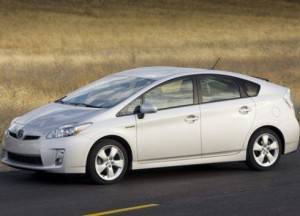
If only humanity would start to realize this, that would alone help to save us from the coming climate catastrophe.
By the way the article does a nice job at describing why this is so hard for hundreds of millions of people, especially without help from the government in the form of nudging and infrastructure development.