Here is how I see it. I rely on those rides to go to work every single day and here what it (would) costs me.
Uber: $250 a month.(Majority)
Lyft: $500 a month (Whenever Uber is too expensive)
Bus : $100 a month (1h:15 for 6 miles and 3 buses... No)
Politics and all internal conflicts aside, there is a need for these services whether we like it or not.
When I need to make a decision in the morning I take whatever is the least expensive and more convenient. I don't want to spend hours on the bus and I do not want a good chunk of my paycheck to go to simply getting to work.
Speaking with drivers everyday, I understand their frustration of driving all around town only for very small profit. Just today, I took a ride with a driver that seemed very frustrated. I didn't want to intrude but he ended up tell me how much he hates UberPool (that's what I use). 70 cents per mile, and when a second rider joins the rate goes down, and for the next even lower. We were 3 different riders.
In the riders perspective, we want the cheapest and most reliable. Sure I want to support those who work for a company that respect them but at the end of the day it is not a charity.
The way i see it, Uber is half price because it is sustained by VC money and ever-decreasing pay for drivers. Taxis or Ubers are in theory your own private vehicle or limo. It should be special occasions. Because you're late to the meeting. Or have to go the airport. Or because you had a drink too much. Having a private vehicle for everyday transport is a luxury and it shouldn't be an easy or sustainable option. Unless you are wealthy.
I totally concur with the OP and the solution is NOT public transit. Public transit is designed to maximize the service to cover majority of the population but NOT 100% of the use cases and population due to the limited funding and resources governments are allowed to allocate to public transit.
I've been to 20 out of 30 world's mega cities. None that I've seen has a "reliable public transportation" that covers all the edge cases like what OP raised and yet have more than decent availability and punctuation. NYC's the closest and best of the bunch with 24/7 MTA subway/bus services together with LIRR/Metro North rail services. However, there are tons of pockets of places where public transit doesn't reach or VERY inconvenient to get to. This is true for tourists and visitors as well as regular commuters.
I've been a commuter riding America's third largest public transit system NJ Transit bus/rail for almost 14 years. And I have many many stories to tell you that public transit is far from perfect and it NEVER WILL BE. But for the 80% of the time when it functions well and punctuate it gets the job done. When it doesn't, I picked the lowest fair of ride for hail service, be it Uber or Lyft or anyone else who can help me get my commute's last-mile problem done. That's the consumer's perspective.
For all of your mega city visits, have you been to Tokyo? If so what did you find unreliable about it? The one criticism I can see is when transport is slowed/halted due to typhoons.
I found that the public transportation in most of Japan was well enough, such that I never thought to myself "If only I had a car/rental right now..."
Not to mention how punctual the transportation is. Compared to where I live, where delays of 10-45+ minutes are expected, the trains in Japan would apologize for being even a single minute late. The three weeks I took the JP Rail I never had a single train be late.
On the Yamanote Line, the longest I had to wait to catch a train to another part of town was 4 minutes. To me, that's absurd. My local station only runs a train once every few hours and if you miss your train you're waiting 3-4 hours for the next one to arrive. Missing a train in Tokyo is a mild inconvenience instead of a waste of most of your day.
It should be noted that Tokyo's subways do not operate between midnight and 5am. Having 4-5 hours of downtime every night dramatically reduces the complexity of infrastructure upkeep and cleanliness, and taxis pick up the slack for the night shift and bar/club crowd.
There are myriad reasons why Tokyo's metro outpaces (for one example) NYC in reliability and sanitation, but not having a 24/7 schedule is a big one.
How can these trains possibly be profitable with that kind of schedule? In fact I remember reading somewhere that they lose money...
Which made me wonder whether that kind of loss is OK and can be waived off as a govt. benefit in lieu of private car ownership. I don't know how the economics would work out, but it would be interesting to see how they compare.
Some lines lose money, but other lines make more money than is lost. The losing lines are still important because if the system doesn't have enough coverage, people won't trust it.
It also happens to be the case that the lines with "that kind of schedule" are the most profitable lines. That's why they run so often.
According to Wikipedia Tokyo Metro made ¥63 billion in 2009.
Tokyo also has the biggest Taxi economy in the world, but as a parent said, they're more for special occasions, and cost about as much as you'd expect to pay someone to be your personal driver.
Public transit doesn't need to be profitable. It's a public good. It's one of the things we all pay a little for to have access to as part of living in a city or community.
They shouldn't lose too much money or be too expensive to run, but that's the conversation to have, not how much profit they generate.
It is exactly this attitude that leads to cost disease. If the government absolutely must handle some need, I still expect them to be efficient and constantly improve productivity:
You can be as efficient as possible and work towards improving productivity and still lose money. That's exactly why those sorts of things are supported by taxes.
And with how much Japan has innovated and improved their railways over the years I don't think this really applies to them. Maybe more of an American thing where we've spent $400,000,000,000 (and expected to spend $1,500,000,000,000) on a "one size fits all" fighter jet for our military that's been a complete failure in nearly every regard.
That's only because America is shitty at implementing public transportation. Tokyo and Seoul are fucking amazing.
NYC subway is actually amazingly convenient despite being run down and disgusting. There's no reason to take an Uber in NYC unless you're drunk late at night, want to feel fancy, or are going to the airport.
Not true. I've been to Tokyo and stayed in an airline operated hotel 10 miles from NRT. The cloest rail station is like 4 miles away and you can't get to downtown Tokyo without hailing for a Uber/Lyft or taxi to transfer to the rail station. (Hotel shuttle doesn't runs to rail station unfortunately. And forget about taxi-ing directly to downtown Tokyo due to the traffic congestion and exorbitant taxi fare.)
Uber's pricing is definitely too low. I paid $3.75 for a 20 minute ride at one point and decided to stop using it entirely because that just seems like exploitation. I'm completely willing to pay more to give workers better wages. Lyft (and other competitors) not only charge more, but drivers keep more of it.
> private vehicle for everyday transport is a luxury
This is called a car and the vast majority have one.
Ride-sharing is actually less luxurious than your own car. It's still shared transit, designed to lower costs and increase affordability by pooling resources and increasing total utilization. It is not meant for only the wealthy.
> Having a private vehicle for everyday transport is a luxury and it shouldn't be an easy or sustainable option. Unless you are wealthy.
What? There are plenty of people living in the suburbs (in the US) that own a car (even 2) and use it for daily commuting and they are not 'wealthy'. And public transportation isn't even an option in those places.
The solution to some problems is reliable public transport, and I am all for improvement, but not a solution to all transport problems.
For instance "I want to get from A to B when I want and in comfort" is not one of those problems in a large number of cases.
Public and private transport have different tradeoffs. I use both when the venn diagram of my requirements and the provision of the transport variety overlaps most.
Eg.
Car to the next town because a bus would be too slow/costly (once you own a car in the NW England busses cost a lot)
Train when I go to Manchester (faster, parking is a problem)
Train when I go to London (faster, though perhaps more expensive, comfortable, parking again)
Car when I go climbing. I don't have much gear, but I do tend to not know in advance exactly when I want to go.
Taxi when I stay out past my last train in Manchester.
You can make public transport better, but it's going to be very hard to make it on-demand, or with the same comfort level as a private car.
This only works in what, 5 - 15% of the US? Public transport isn't viable for commuting in most of the country. If you factor in time and the raise in tax required to subsidize it there it is likely that it is more cost effective to own and maintain a used car.
Perhaps not for most of the country by surface area, but far more than 5-15% of the population could be effectively served by better public transportation.
I agree but the issue becomes any sweeping legislation or tax increase to fund such a program will negatively many millions of people without any benefit to them. These people are marginalized already and can't take a hit like that so their more wealthy counterparts in the cities can have a higher standard of living. It can only really be implemented at the city level in a fair manner, thus it isn't really a national solution.
>I agree but the issue becomes any sweeping legislation or tax increase to fund such a program will negatively many millions of people without any benefit to them.
Except, you know. Less drunk driving, less traffic, less pollution, fewer road fatalities, and less tax money spent on road maintenance. Those little things.
And what "many millions of people?" Public transit is mostly paid for by municipal taxes, not federal. Federal taxes paid for a bloated highway system that negatively impacts many people even though we have long since hit the point of diminishing returns on more highway infrastructure.
> Except, you know. Less drunk driving, less traffic, less pollution, fewer road fatalities, and less tax money spent on road maintenance. Those little things.
How do people who are not served by public transit feel any of these effects?
> And what "many millions of people?" Public transit is mostly paid for by municipal taxes, not federal.
My point exactly, this is how it should be but municipalities are rather cash strapped at the moment so you likely won't see increased spending on anything. Thus "more public transit" isn't really possible without federal intervention.
> Federal taxes paid for a bloated highway system that negatively impacts many people even though we have long since hit the point of diminishing returns on more highway infrastructure.
This ignores the positive impacts. If only local roads existed very little trade would be able to take place vastly lowering GDP. Can the system be run in a more cost effective manner, certainly but that would require pushing out the public sector unions that demand unrealistic wages. Pick your poison.
>How do people who are not served by public transit feel any of these effects?
What? You realize air tends to circulate right? And people tend to know other people in their lives who get hurt by accidents? And less traffic on roads is an externality that benefits people who drive. As does giving drunks a safe way to get home.
>My point exactly, this is how it should be but municipalities are rather cash strapped at the moment so you likely won't see increased spending on anything. Thus "more public transit" isn't really possible without federal intervention.
Road infrastructure and sprawling development are the reasons they're cash strapped. If they had adopted more transit-centric development patterns they would have raised their tax base to pay for it rather than exporting the people who use their infrastructure to unincorporated 'bedroom communities' where they don't pay into anything.
If we subsidized transit to the extent that we subsidize sprawl this wouldn't be a problem.
>This ignores the positive impacts. If only local roads existed very little trade would be able to take place vastly lowering GDP. Can the system be run in a more cost effective manner, certainly but that would require pushing out the public sector unions that demand unrealistic wages. Pick your poison.
Please review what I wrote. I didn't say not to have highways. I said we hit the point of diminishing returns long ago and additional spending in this direction is no longer beneficial.
If only local roads existed: Trains would have continued to serve most locations cheaply. The federal highway system did great damage to the far more efferent but far less subsidized train network. Trans take less land, less capital, fewer workers, less fuel, and cause fewer deaths.
I suggest you look into the history of that. Rail lines created massive monopolies that had a stranglehold on American businesses until the creation of highways. Why are goods even transported via trucks if rail is such a viable and cheaper alternative? Are business owners simply dumb?
> Why are goods even transported via trucks if rail is such a viable and cheaper alternative?
Multi billion dollar subsides subsidies. Markets are only rational when left alone, toss more than $425 billion dollars just to build something and then maintain it with government funds and efficiency takes a back seat.
What roads would public busses use if the ones created by those subsidies didn't exist exactly? Do you propose some sort of all terrain bus? Or shall we build train tracks to everyone's home? Won't that be lovely in the dead of night.
FYI: a great deal of the funds for highways come in the form of tolls or gasoline taxes. A great deal of the cost of public transit on the other hand is subsidized by state and local sales taxes and income taxes. It is public transit that is subsidized in the real world not the other way around.
Current federal funds are only a small part of the overall picture especially when you start including the gas subsidies. The system is designed to be complex to hide overall costs, but toll roads are a great reminder of the actual cost per trip. Further, only 1/4 of miles driven are on the highway system so people have plenty of other ways of getting around.
Anyway, public transit is not what I am talking about, the US rail system continues to exist due to efficiency not subsides. Passenger rail is currently a tiny and largely ignored minority of overall traffic.
> Passenger rail is currently a tiny and largely ignored minority of overall traffic.
Exactly. Why do you assume it can scale to the point that it can replace all other forms of transportation? Rail is only cheap and efficient because those are the markets they selected to service, it won't scale up.
If it can why not get some investors and prove everyone else wrong?
In Europe, your bus fare would be half of the price and probably you would need one or two connections.
The public transport is much more developed and to me seems like a much better mass transportation alternative. More ecological, cheaper, less cars overall.
"Yes, but poor people use public transportation to come from bad neighborhoods to good neighborhoods to rob us! We must ban all expansion of public transportation!"
This exact sentiment is echoed by many in the US as a reason to not expand public transit. When asked about criminals driving cars to commit crimes, they were not open to bulldozing the roads over. It's gross.
The crime rates are much higher in the United States than in Europe. This website claims rape occurs at a 3 times higher rate and murder at a 6 times higher rate. I couldn't find any good statistics for robbery but I imagine it's in that range. Yes, crime has been decreasing in the United States for around a quarter of a century, but it still occurs at a much higher rate than Europe and almost an order of magnitude higher than in Asian cities with good transit like Tokyo or Shanghai.
Whether irrational or not, any public transit paradigm has to take the realities of crime and the citizens' perceptions of crime into account if it's going to be successful. And if the crime rate was as low as it is in Europe, it might be easier to get European levels of support for public transit. This implies the need for better policing, earlier social interventions, etc.
Rape and murder are both crimes where the odds are good you know your assailant. I don't believe the overall rate has much to do with transit. Of course, you admit it may not be rational- but in theory education can ease irrational thoughts, and this is likely simpler than solving the problem of crime.
In the US, public spending is generally a way to funnel money to cronies of the inner party (e.g. transit worker unions, construction unions, politically connected consultants). Various other interest groups - mainly NIMBY homeowners - will also demand their pound of flesh.
Wealth is getting increasingly concentrated in this country, and not into the hands of union workers. I think your description of the role of public spending is misleading at best.
I could say, equally (if not more) fairly, that all spending (public and private) is generally a way to funnel money to cronies of the capitalist system (e.g. CEOs, shareholders).
Maybe a more useful thing to discuss is what the money does in the process. Transit workers do provide labor that makes today's transit systems possible, after all.
True; wealth is primarily getting concentrated in the hands of middle class (who become upperclass) homeowners in NIMBY cities. See the work of Matthew Rognlie on this. (Growth in home values is the entire source of increased r in Piketty's r > g.)
If you want to claim that the US government spending $2-4B somehow funnels money to the capitalists, it's tangential to my point. Wherever the money gets lost, the point is that the US is simply not capable of building transit the way the rest of the world does.
>"Yes, but poor people use public transportation to come from bad neighborhoods to good neighborhoods to rob us! We must ban all expansion of public transportation!"
This is why the (Boston) red line doesn't extend to Arlington.
Replace "poor" with "black" and you have the reason public transportation has been suppressed in large parts of the US.
When I lived in Atlanta a suburban city official explained that "we all know the sort of people who hang around bus stops" while killing plans to expand bus service.
Wilson gave to the media at the time, which said, “People fear that rapid transit would give Negroes greater mobility and consider the $0.15 fare as a gift to ‘a certain segment of the population.’”
I'm sorry but that official's statement does not even kinda imply race. Like it or not, bus stops and train stations accessible by everyone are hotbeds of panhandling, pickpockets, and sometimes worse. An area where people just pass through on their way to somewhere else far away, distracted and in a hurry, is a great place for criminal behavior.
To understand the context, this was a white suburb in a largely segregated city twenty years ago. And in that context, the racial implications were very clear.
If you read up on the history of public transportation in the US, you will be gobsmacked by the racism at play.
You are arguing about whether a non-attributed quote which was explicitly intended to show racism via coded language actually shows racism via coded language.
If this were an attributed quote, you could go look up the source and argue context. It isn't.
TBF the north/south rail coverage discrepancy already existed a hundred years ago when you could get from the Loop to Evanston with one transfer at Uptown Station. Though perhaps the same mentality applied but towards the Irish.
I am sorry, good sir, but I must vehemently disagree with your reasoning. Arlington is not such a bad area, especially when compared to Dorchester, to which the Red Line does connect. In addition, the Red Line links through Mattapan cough Murderpan via trolley. So, I consider your comment thoroughly debunked.
It was arlington that blocked the expansion because they didn't want the wrong people coming from the wrong areas, not the other way around. [I lived in Arlington in the 90s-2000s]
Wow such confidence. Too bad your understanding is lacking.
Arlington is indeed not such a bad area. But folks in Arlington and Lexington (the planned terminus for the red line) were the ones that objected to the expansion. They didn't want increased traffic (all the people trying to park to take the train would make their towns less quaint and all), and they didn't want the urbans/poors/etc to be able to easily visit.
Arlington resident here. Your comment in no way debunks the parent. The commenter did not say Arlington is a bad area. If I'm giving you the benefit of the doubt, you either misread or do not understand.
It's real (though flawed) logic that's been used repeatedly to stop the expansion of public transport from inner cities into more wealthy suburbs. For a long time in the USA, the prevailing wisdom was that only poor people and criminals ride the bus/subway. That's changing now that more and more people, young and old, are gravitating to car-free city life.
A fathom is the distance between fingertips. "To fathom" in a literal sense is either wrap your arms around an object to measure its size, or to drop a weighted rope to the seafloor, and haul it up, counting one fathom for each double-arm-length of rope hauled in. "To fathom" in a figurative sense is to acquire more than superficial knowledge of a topic--to attain a full depth of understanding. To be unable to fathom something is literally being unable to wrap your arms around it, and figuratively unable to wrap your mind around it.
A phantom is an intangible apparition like a ghost or specter. It is not usually used as a verb, but if it were, the meaning would probably be similar to "to ghost", which is either to work invisibly or to vanish suddenly, without warning or explanation. As an adjective, it means that the modified word does not truly exist.
People in the US are still very class-aware, even if they are not obviously racist. Anecdotally, at a pool party in her suburban McMansion subdivision, I overheard a black grandmother express dismay at the possibility that someone might build a high-density apartment building in the neighboring cattle pasture, because they attract (literal quote) "that kind of people." Nobody wants poor people in their neighborhood, because it is presumed that even if they don't steal anything they can pick up, they will crash all the property values in the surrounding area.
As someone not particularly fond of driving a car, I would love to be able to get around on public transportation, like I did in Chicago. But that requires density to be cost-effective, and for too many people, density equates to too many poor people living near their stuff. So it's more of a two-part process. The mass transit and the housing density go hand in hand, and the NIMBYs are afraid of both.
The thing is, the user experience of Uber, Lyft et al is strictly better than public transport. Some would even say it is 10x better (in the From Zero to One sense). It picks you up whenever you want, wherever you want and drops you off exactly where you need to go.
I agree that buses are more ecological, but doesn't this just mean that we should combine Uber and public transport? In the future I see a fleet of larger vehicles combined with a Uber Pool type app working really well. And even further in the future these vehicles would be self driving.
It depends on the city and the route you're taking. If there are dedicated bus lanes, or other dedicated forms of transport (trains, metros), taking an uber can be slower than taking transport.
Certainly in London, unless you're taking a route that cuts across the city in one of the outer districts, during quiet times of day, these services are rarely materially faster than public transport. If the traffic info is inaccurate you can end up in a journey that's many times slower, without expecting it.
It's still great as an option; it expands the utility of taxis tremendously, since previously the arrival latency was unknown and potentially quite high. With a mature marketplace, the QoS for taxis as a whole goes up tremendously.
But really it's a simple competition with the QoS of the local public transport, and in my experience (in the UK) the Uber QoS is somewhat correlated with the QoS of the local public transport, so it is rarely (if ever) objectively better. It just offers different characteristics that are sometimes worth the cost.
> In the future I see a fleet of larger vehicles combined with a Uber Pool type app working really well.
This already exists. Or it existed anyway. NYC used to have "Chinatown buses" that ran underserved routes for a fraction of the price. NYC and the MTA prosecuted them and got rid of them. Furthermore, innovation and competition in busing is great in Latin America.
But we're waiting on regulations to change, not for innovation to happen.
I agree that a fleet of self driving mini buses sounds great for efficiency and even housing prices (the pool of commutable properties goes up and the price of rent goes down). Even a fleet of buses with drivers that are allowed to innovate on the business model (monthly subscriptions? scheduled pickup windows? flex pricing?) would be better than what the U.S. has now.
Right. They should be legitimized and licensed so companies like Lyft can provide different features (wifi, extra clean vehicles, scheduled rides, all-you-can-ride plans, etc.) and different lines.
> NYC used to have "Chinatown buses" that ran underserved routes for a fraction of the price. NYC and the MTA prosecuted them and got rid of them
The implication in your comment seems to be that the MTA went after the Chinatown buses because they were anti innovation and competition.
I'm not sure if you ever took the Fung Wah bus from Boston to NYC, but one reason the DoT and MTA worked so hard to get rid of them was they had a tendency to burst into flames by the side of the road.
And yet people in outer burroughs and Jersey still have really long commutes and unacceptable bus service. NYC and the MTA weren't as interested in replacing the Chinatown buses with safer options or otherwise improving the safety standards.
> the user experience of Uber, Lyft et al is strictly better than public transport
Taking the bus from my home to work, I get to skip the bridge toll plaza, I get a nicer view (being up higher than an individual car), and I can get a seat with space enough to comfortably get work done.
Taking BART home is substantially faster than waiting in traffic out of the city, whoever is driving.
Uber, Lyft, et al are often a better user experience on balance than public transit. Calling them "strictly better" is an exaggeration.
>The thing is, the user experience of Uber, Lyft et al is strictly better than public transport. Some would even say it is 10x better (in the From Zero to One sense).
A bus can transport about 60 people in footprint of 2-3 cars (which would transport about 15). There is no way a transportation system that revolves around everyone getting into cabs is going to match that sort of efficiency. The "user experience' of such a service that ignores externalities like forcing people to sit in traffic (raising travel times and prices) is not a good analysis.
Also, many people don't think that having to walk a few blocks as part of a journey is some kind of crazy physical burden.
> There is no way a transportation system that revolves around everyone getting into cabs is going to match that sort of efficiency.
If _everyone_ used lyft line/uber pool, the vehicles could be larger and more efficient. Uber/Lyft know where people are going; at scale ("everyone") they can aggregate rides more extensively.
>If _everyone_ used lyft line/uber pool, the vehicles could be larger and more efficient.
That's called a bus. If I have to ride in an efficiently routed, high capacity vehicle I'm essentially just riding a bus service with an app that tells me when the next bus is coming. What you're describing is just an upgrade to a public transportation system. There is no reason a well administered city government couldn't do all of this.
Hell, a city could develop an app for getting around in it that serves multi-modal transit. You could have an app or a card that works as a single interface for riding buses and trains, renting out a car-share or bike-share, and hailing cabs. There is no concrete benefit to tying their city transit to the whims of a private corporation when they don’t have to.
>Uber/Lyft know where people are going; at scale ("everyone") they can aggregate rides more extensively.
Not "everyone." Just people with smartphones at the moments when they happen to have smartphones with them. It’s also dubious to claim we would realize that many benefits from eking out microefficiencies in aggregating rides. What's the real upside there? Well maintained bus lines in walkable city plans do just fine enough on their own.
The bus doesn't necessarily go where I want to go, when I want to go there. Uber/Lyft do. At scale, they can do both demand-dispatching and ride-aggregation.
> There is no reason a well administered city government couldn't do all of this.
It would be great if they did, but I'm surely not holding my breath for everyone to get a well administered city government. In the hypothetical that we're discussing (uber/lyft usage that's high enough for most rides to be aggregated) the cost of using uber/lyft would be much lower per-rider. In that world, cities would be better off giving residents subsidies for private ride-hailing use.
As long as there's a competitive market with multiple entrants, the cities wouldn't be at the mercy of the private corps. The concrete benefit of the private companies is much more competent technology development, and the option to switch if they're not giving you what you want.
> Not "everyone." Just people with smartphones at the moments when they happen to have smartphones with them.
"Everyone" was the premise of the comment I was replying to. But seriously, smartphone penetration is quite high. And how many smartphone users don't carry their phone with them when they go out?
Buses aren't a good choice for "everyone" either--they only help people whose trips align with bus lines and schedules.
>The bus doesn't necessarily go where I want to go, when I want to go there. Uber/Lyft do. At scale, they can do both demand-dispatching and ride-aggregation.
Hail a cab? You can even use a cab-hailing app? There is nothing magic about Uber/Lyft's service that a municipal taxi service couldn't use.
And an aggregated bus service through Uber isn't going to be any better. Once the VC funding subsidy runs dry and the dream of cheap, point-to-point ride hailing is going to die. You're going to have to learn to walk a few blocks every now and then.
>As long as there's a competitive market with multiple entrants, the cities wouldn't be at the mercy of the private corps.
If you're talking subsidization then it will have to be. Administering tax subsidies or credits for using ride-hailing in lieu of actual public transit would be a nightmare to implement if the market is truly open to any entrant to the market. And there is no reason a city government should want to allow a private corp to skim off the top either.
>But seriously, smartphone penetration is quite high. And how many smartphone users don't carry their phone with them when they go out?
More than you would think. Young people, old people, poor people, mentally handicapped people, people who have been away from power outlets for a while. Foreigners who don't have domestic SIM cards yet.
>Buses aren't a good choice for "everyone" either--they only help people whose trips align with bus lines and schedules.
Bus lines and schedules aren't exogenous. They're put together based on estimations of where the demand for the bus line is. You think people aren't at the mercy of Uber and Lyft's schedules? You call a car and it says you're waiting 15 minutes for the next ride, that's no different than going to the bus stop and seeing that you'll be waiting 15 minutes for the next bus.
> Hail a cab? You can even use a cab-hailing app? There is nothing magic about Uber/Lyft's service that a municipal taxi service couldn't use.
Are you arguing for or against ride-hailing apps, here? The original comment you replied to was that ride-hailing (as exemplified by uber/lyft) is a much better experience than existing public transit.
> And an aggregated bus service through Uber isn't going to be any better.
Compared to existing public transit (on a set schedule/route), uber/lyft are better because they're demand-dispatched based on where people want to go and when.
> Young people, old people, poor people, mentally handicapped people, people who have been away from power outlets for a while. Foreigners who don't have domestic SIM cards yet.
Many of those people will also have a hard time figuring out which buses (with which combination of transfers) will get them where they want to go. Assuming that public transit even goes where they want to go in the first place.
You're concerned about excluding people, but you're ignoring all the people who are excluded by transit routes/schedules.
> Bus lines and schedules aren't exogenous. They're put together based on estimations of where the demand for the bus line is.
Those estimates are exactly that, estimates, and the resulting routes are subject to lobbying. Plus, the bus lines don't change very often--if they did, it would be very confusing.
But demand-dispatched transportation like uber/lyft know exactly where people are starting from, exactly where they're going, and exactly when. If there's a popular show at a music club, the bus lines aren't going to adapt to that in real time.
> You call a car and it says you're waiting 15 minutes for the next ride, that's no different than going to the bus stop and seeing that you'll be waiting 15 minutes for the next bus.
The difference is that I'm waiting at home rather than waiting at the bus stop. And that the car is going where I want to go, without transfers.
>Are you arguing for or against ride-hailing apps, here? The original comment you replied to was that ride-hailing (as exemplified by uber/lyft) is a much better experience than existing public transit.
I never said to ban hailing apps. I said they’re not useful as cornerstones of a transit system. You’re bringing up edge cases to argue against transit when, in fact, the edge cases are where the alternative options make sense. But they’re edge cases. You don’t build general infrastructure around edge cases.
And once the subsidization schemes end, those services will wind up being prince according to the real cost, illustrating just how much of an edge it is.
>Compared to existing public transit (on a set schedule/route), uber/lyft are better because they're demand-dispatched based on where people want to go and when.
You’re comparing existing public transit to a hypothetical future ridehailing service. Of course it doesn’t have problems, not existing has that advantage. If you wanted apples to apples, you should compare it to an idealized future public transit system, which winds up looking very similar, except without some Silicon Valley VCs skimming significant amounts of money off the top.
>Many of those people will also have a hard time figuring out which buses (with which combination of transfers) will get them where they want to go. Assuming that public transit even goes where they want to go in the first place.
And yet they do. Have you ever lived in or near a transit-oriented city before? It sounds like you haven’t.
>You're concerned about excluding people, but you're ignoring all the people who are excluded by transit routes/schedules.
This is some weird pretzel logic here. I'm talking about building out transit to include more people.
>Those estimates are exactly that, estimates, and the resulting routes are subject to lobbying. Plus, the bus lines don't change very often--if they did, it would be very confusing.
People make their decisions about where to live based on transit access. This is why people like fixed-rail streetcars over buses where routes can be changed. The permanence is a feature, not a bug. It raises housing values for the people near it since they can plan their lives around it being available to them.
>But demand-dispatched transportation like uber/lyft know exactly where people are starting from, exactly where they're going, and exactly when. If there's a popular show at a music club, the bus lines aren't going to adapt to that in real time.
It’s becoming extremely clear that you have no experience of a transit oriented city. In most cities, the baseline capacity is generally enough outside of rush-hour to accommodate moderate increases in traffic from local events. For larger ones that fill up a part or stadium the transit systems generally know when large events are happening and increase capacity accordingly. They can do this because those things require organizers to book reservations and file for permits weeks or months in advance to alert them.
I don’t know why you think having 2 minutes of warning when people start booking rides are going to enable ride hailing apps to be more dynamic than the actual municipal government’s permitting data. No system is dynamic enough to respond that quickly except with hand-fisted nonsense like surge pricing.
>The difference is that I'm waiting at home rather than waiting at the bus stop. And that the car is going where I want to go, without transfers.
As long as you’re okay with spending $11 instead of $4 there is no reason both options can’t exist. But for most people’s everyday travel, they’ll settle for the $4 instead of expecting technology to solve all the issues by magic.
> More than you would think. Young people, old people, poor people, mentally handicapped people, people who have been away from power outlets for a while. Foreigners who don't have domestic SIM cards yet.
Ride-sharing apps are much simpler and standardized compared to the incredibly complexity of public transit options and schedules when traveling. I've seen first-hand all those people (except those without working phones) have an easier time with uber/lyft.
If you live in a congested city taking the train can be faster than Uber for some trips. I don't like paying $15-$20 for the privilege of sitting in traffic when the same trip would have cost me $2-$3 on public transit.
But there is a convenience factor to consider. Trains run on a schedule; they get crowded, you may have to stand; they depart from and arrive at predetermined locations. They may travel faster and more efficiently, but do they actually get you to your destination quicker? Do you spend effort planning your schedule around the train?
In my experience Uber is vastly superior than all other available transportation options.
In my experience it's only preferable to: 1. parking/driving downtown, which is more expensive and 2. not being late for work because I lack the will to get up some days. The express bus line here will pick me up reasonably close to my house and drops me off across the street from my building, and can drive in exclusive lanes, such that Uber/Lyft often takes longer and significantly more expensive. I do not live in a dense enough area to really care about how packed the bus is and I certainly don't care about whether I need to sit or stand.
I don't know if you're thinking about area or population, but by either metric London is bigger than any city in the US, and has a much better public transport system.
NYC transportation sucks even within areas where the population is very dense. It takes 2 hours to get from Bronx to Coney Island on subway. Plus there are almost daily service disruptions of all kinds.
San Francisco's Bart is hated by almost everyone but it is much faster[1]. In fact, I have never taken a slower subway than NYC subway.
> It takes 2 hours to get from Bronx to Coney Island on subway
That's a bizarre example. Of course it takes a long time to go from one corner of the city to the other. No reasonable person would be making that commute regularly.
The point is that the subway is slow and unreliable unless you are commuting within Manhattan for 4 stops.
Lots of people work in Manhattan and commute from Brooklyn. It's a 1.5 hr train ride to Columbus Circle + 0-60 minute random slowdown where you may have to take the train in the opposite direction for a bunch of stops.
Sometimes they actually tell you to get off the train, take a shuttle bus and get back on the train. Other times the train stops 8 subway stops from where you have to be with an inaudible message from the conductor. As a result, you are stuck the middle of nowhere at 8 PM on a Saturday. Only option is to take a local bus (that tends to be much more reliable) or Uber. This kind of treatment is unheard of in any European country including Russia.
It could have been a 45 + 0-5 variation minute ride if trains ran as fast and reliably as they do in almost every other city.
the right word is "denser". American cities are built for cars, so even if you take a bus somewhere you're now walking 15 minutes between buildings.
This can be solved on a small scale (build "pockets" of livability), but mass transit will have a harder time surviving without other urbanization changes
The most aggravating thing that I saw about the #1 was it was on a nominally ~10 minute schedule at peak times. Pretty regularly, I'd wait 20+ minutes only to see three #1 buses, nose-to-tail, arriving.
The conurbation that New York is part of is much bigger than London. The London metropolitan area is about 8.5k square kilometers. The New York metropolitan area is about 35k.
Even so, even more sparsely population areas in Europe have better public transport than many US cities.
When I started in uni in Sweden, before I found a local apartment I had to commute from my parent's place. The commute basically crossed a county with a population density of 120 ppl/km2. They lived in a village of 4000 ppl, and I commuted through farmlands, connecting in a city of 100,000 ppl to the student town of 90,000 ppl. It was about 70 km (43 mi) and 50 minutes each way (1 regional bus, 1 train, 1 city bus). Despite this, there were interlocking combinations of these trains+buses about every 20 minutes.
I always dislike these comparisons. The truth is simply that it depends. You can't justify an unknown city having a certain quality of bus routes compared to a diverse range of tens of countries by saying "it's smaller".
It'd be slower and more expensive in some parts of the UK, easier in others and in some countries I assume you'd be expected to just cycle the 6 miles.
Maybe I'm totally wrong on this, I guess it just didn't seem like an odd choice in the UK and other countries have much stronger focus on cycling. "People I know" will be a hugely unrepresentative sample though.
I can't find the stat I want for Copenhagen, they have 1/3rd to 1/2 of people commuting by bike but I can't find out how many journeys of ~10km are completed by bike. I know it's a small number of cycle journeys, as many are shorter, but that's not quite what I'm after.
I can't seem to find mode share as a function of commute distance.
Pure anecdata, but when I worked in El Segundo and lived in Santa Monica, I usually cycled the 12 miles to work. It took about 5 minutes longer than the drive.
Thanks, I saw references to it being 50% but then also found a source where 50% was simply an aim so assumed it had been taken out of context. I think from that article the figure might be over 40% though at least.
AFAIK, most traffic planners seem to believe that "if you build the streets/intersections for cycles, people will use cycles a great deal up to about x km, but only rarely for longer trips" for some x. I've heard different values of x, nothing close to 10. I'm sure it depends on the climate, terrain, etc.
I'd be very interested in hearing about any place that uses a value as high as 10km, and the rationale.
I think it doesn't seem a totally odd choice in the UK partly because the public transport is often pretty poor (London is a huge exception to the usual UK situation). Certainly here in Cambridge I'd choose a 6 mile cycle over the bus every time. But then I enjoy my (4 mile) cycle commute; I don't think I'm particularly representative. The right fix is for the buses to be better.
As the person commenting on that article points out, cyclists using strava are probably more likely to be athletic and cycle further and faster than cyclists not using strava
(They certainly have advantages like exercise, noise, and storage space.)
Bicycles are physically smaller, but they still need a substantial safety zone, just like cars. It's easier and faster to stop a 25mph car than a 25mph bike.
Bikes need a lot less space than a car. Look at some videos of Copenhagen: https://www.youtube.com/watch?v=qYGL80qx71g if cars were that close to each other they'd be intersecting.
> It's easier and faster to stop a 25mph car than a 25mph bike
Really? Is it that much different? Nothing I found was particularly conclusive but didn't suggest much of a difference.
"Cars, although far less dense, are objectively better than the latter case. Safer, quieter, less polluting. "
Citation desperately needed. Also, keep in mind there are different ways of defining "safe". Cars are only "safe" inasmuch as they are safer for the occupants and incredibly dangerous for everyone else around. If we considered harm to people _outside_ the car we would view them as much more dangerous (and walking, motorcycling, cycling, etc as being much safer)
That's a really shitty comparison. Unless cyclists really do drive in such packs (which they don't). In reality, the effective space taken by cyclist on genera purpose road is bigger than a car — you need a huge safety margin to overtake a cyclist, and if you cannot do that you a forced to follow them untill you can and that's really ineffective.
All this does not apply to dedicated cyclist roads/lanes, of course.
Depends where you are but some cities easily have the density suggested there.
> In reality, the effective space taken by cyclist on genera purpose road is bigger than a car — you need a huge safety margin to overtake a cyclis
More than a car? I've certainly not been given more space when people overtake me. Remember a car is 6 feet wide, that's quite a bit of space already that's taken up by a car.
The city in these videos has many cyclists (and one of the most successful bike-share schemes in the world), but rather scandalously provides very little bike infrastructure and even less enforcement (bike lanes are generally used for parking).
Finally, you might wish to note that one generally refers to "riding" a bike in English, rather than "driving". The same goes for motorcycles in most contexts. This is different from some other languages, such as German, where the same word is used for operating all of those conveyances.
Bicycles and Land Rovers are both operated on the street. Humans are on the street as well, with varying degrees of protection. I often use the street while mounted on a bicycle. If my skull is crushed by a Land Rover's tire that will be a markedly different experience from my skull being hit by a bicycle tire.
Please elaborate; I don't really understand what you mean.
GP's point was asinine as well. They have failed to address the core issue - the difference between operating a two+ tonne metal box and a 15 kilo bicycle, and how getting hit by either of those varies.
European cities are not smaller in terms of population or services offered. It's just European cities are better planned compared to most American cities. This whole "suburban" lifestyle .....
Suburbia has the benefits of affordable housing at the cost of transportation. That's why it was such a successful concept. In many non-American cities proximity to trainstations increases housing cost. With the colonization of America and the technical innovation of the automobile this was no longer deemed necessary.
Yes, but the physical size of American cities was a deliberate choice on our part. We could have had denser cities if we wanted, and we could fix that starting today if we wanted.
Where does your definition of Europe end? NATO? The Urals? Minsk and London might as well be in entirely different civilizations.
And it's not like your values are substantially different.
Similar here, about 30euro per month for unlimited bus travel, but not just inside my city, it's for an area covering about half the country. (Bus- and tram lines)
In Europe, your bus fare would be half of the price
Which Europe? ~$100 pr month seems about par for the course for most major cities I've looked at, and some cities, like London, charge quite a bit more.
For bus fare, London is only $100/month. You can get around just fine by bus, although people tend to prefer the tube (which is typically $150-200/month).
Not at all. I can work or read on a train. I can't do that in a car. Nor does the car take me to London in 1hr15, at up to 125mph, like the public transport from our town[1] does.
Motion sickness. If I read in a car (whether paper or screen) then I feel like crap for the rest of the day, basically. It's not at all uncommon.
Plus the train has tables, 240V sockets, wifi (which selects the best from several different providers, so better coverage than my phone), all of that. There are seats available from our station on pretty much every train, and the journey time is more reliable than the car.
I'm a huge fan of trains and hate cars, but the motion sickness bifurcation you describe is unusual, so I would avoid trying to use motion sickness to carry water in pro-train arguments.
The vast majority of people who experience motion sickness in cars will also experience motion sickness in trains.
It took years for me to really understand why so many people don't love trains like I do: motion sickness makes the freedom, relaxation, and ability to focus on work I experience not universally shared.
Sure. In this particular thread I'm just answering two generalised statements ("Public transport is intrinsically worse", "Why can't you work in a car?") rather than making a universal case.
I'd be genuinely interested to know stats for car and train motion sickness, though: I haven't found any on a quick Google. Motion sickness in general appears to be ~30% of the population. Obviously it's not a simple scale: my wife, for example, will get car-sick (without reading) on a fast, bendy journey more easily than I will; neither of us get train-sick; I get sea-sick much worse than she does.
I dunno. Go anywhere in the world and look at how billionaires and Presidents get around. Do they catch buses or do they choose to get around in private, possibly chauffeured, vehicles?
(Let me just pre-empt someone's example of some billionaire somewhere who loves catching buses, I'm sure there's one out there somewhere.)
Frankly who cares how Presidents and billionaires get around? It's entirely irrelevant to your unsubstantiated claim that "public transport is intrinsically a worse and less convenient experience than having a private driver."
For what it's worth, the Dutch Prime Minister Mark Rutte cycles to work just like most everyone else in the Netherlands.
Netherlands, of course, being an example of a place having public transport which is exceptionally good and quite often more convenient and more practical than having a private chauffer.
And yet its been commonly limited or forbidden to let services like Uber operate the way they do in the US. Berlin has uber with taxis only, for example.
Taxis in Germany are regulated as part of the public transport. The state may even force Taxi companies to put more cars on the road, they are obliged by law to take on any passenger and there is a public supervision. In return, Taxis receive some benefits. Uber tried to take the benefits but not the obligations. Stuff like that doesn't fly here. That's what got them banned.
What benefits are you talking about? As a taxi your only (and important benefit) is the monopolization of your business by the local government. All the rest are plays around that.
Also, misses the point: the argument that infrastructure in europe is so much better that there is not a demand or a need for services like uber and lyft contradict the necessity of several cities to ban it. Otherwise they wouldnt have had to do anything and they would have failed.
Uber has not been banned in Germany. They provided an illegal service and have never applied for a permit. They have never been legal. They also had drivers operate without the required health certificates and without the required insurance. (The usual "independent contractor and we're just an intermediary" dance didn't fly either - if you're soliciting an illegal service you're not protected by law just be because you're not directly providing the service.)
Please also note that not all of Ubers services in Germany have been illegal and some still operate. Notably, the classic car-for-hire service is legal, but seems to be making losses, so yes, they failed.
> As a taxi your only (and important benefit) is the monopolization of your business by the local government.
The following describes the situation in Berlin. Since Taxi regulation is partly local, things will differ slightly elsewhere, but the gist applies. Data is from 2012, so somewhat outdated but nothing major changed.
Monopoly is not an important benefit for the local taxi industry. There are about 3000 Taxi companies in Berlin, of which the large majority owns 1 car and only about 10% own three or more cars (about 7000 cars, one per 500 inhabitants). Taxi licenses in Berlin are effectively unrestricted. If you want one, prove that you're not convicted of a crime that makes you ineligible, fill in a 6 page form and hand proof of insurance and some papers, pay a fee, wait. Drivers need to pass a health check every few years (vision test etc) and a one-time knowledge test. All in all, a few hundred to a low thousand EUR and you're in business.
However, Uber didn't even consider applying for a local license here, well, "because". They consciously chose to run an unlicensed Taxi service and spin it as if they'd be unfairly treated by authorities. (Eine Runde Mitleid)
Licenses may be restricted in other jurisdictions or even - since it's a part of the public transport network, Taxis may even be subsidized (Ruftaxi for example)
Benefits that Taxis enjoy is that they're allowed to use lanes restricted for public transport (they are public transport) and may stop on any road at any time to pick up passengers. There are restricted parking spaces at airports, train stations and in central locations that are reserved for taxis.
> Uber has not been banned in Germany. They provided an illegal service and have never applied for a permit. They have never been legal. They also had drivers operate without the required health certificates and without the required insurance. (The usual "independent contractor and we're just an intermediary" dance didn't fly either - if you're soliciting an illegal service you're not protected by law just be because you're not directly providing the service.)
Please also note that not all of Ubers services in Germany have been illegal and some still operate. Notably, the classic car-for-hire service is legal, but seems to be making losses, so yes, they failed.
My experience in berlin was that all uber drivers were taxis and as such the rates they had were comparable if not the same to taxi rates. There could be conditions that I did not see as a tourist, but if Uber could freely move its prices it would have been substantially cheaper that regular taxis. It is so even in argentina, where the service is outright declared illegal.
> The following describes the situation in Berlin. Since Taxi regulation is partly local, things will differ slightly elsewhere, but the gist applies. Data is from 2012, so somewhat outdated but nothing major changed.
Monopoly is not an important benefit for the local taxi industry. There are about 3000 Taxi companies in Berlin, of which the large majority owns 1 car and only about 10% own three or more cars (about 7000 cars, one per 500 inhabitants). Taxi licenses in Berlin are effectively unrestricted. If you want one, prove that you're not convicted of a crime that makes you ineligible, fill in a 6 page form and hand proof of insurance and some papers, pay a fee, wait. Drivers need to pass a health check every few years (vision test etc) and a one-time knowledge test. All in all, a few hundred to a low thousand EUR and you're in business.
However, Uber didn't even consider applying for a local license here, well, "because". They consciously chose to run an unlicensed Taxi service and spin it as if they'd be unfairly treated by authorities. (Eine Runde Mitleid)
Licenses may be restricted in other jurisdictions or even - since it's a part of the public transport network, Taxis may even be subsidized (Ruftaxi for example)
Benefits that Taxis enjoy is that they're allowed to use lanes restricted for public transport (they are public transport) and may stop on any road at any time to pick up passengers. There are restricted parking spaces at airports, train stations and in central locations that are reserved for taxis.
Thanks for the specific Berlin regulations!
I only saw what I saw, didnt look much into it. If the licenses are relatively unrestricted (cheap, easy to obtain and unlimited) then there is very little stopping a regular person from going through that process and joining Uber. Uber could assist in abiding a very easy regulation and i attest that they tend to not even follow the easy ones (In argentina, they didnt even get a tax id). They deserve and it is just that the law applies to them.
Still, prices are still regulated in berlin, meaning that you cant have the business model of uber work the way it usually does, by combining low-earning drivers with consumers. Also, do taxis require to have car identification? That is another way to restrict low-earning drivers into the market. Etc etc.
If it only were doing basic, cheap and unrestricted access to taxi licenses, then anyone would do it and join uber, without uber needing to do much.
The answer is that, you are using a service that is unsustainably too cheap. In the longer term the price will have to increase, probably quite significantly and you'll have to choose whether you think it's still worth it or take the bus.
Unfortunately you, and many others are the ones benefitting from drivers being underpaid.
It's almost like Uberpool could be a privately run bus service using larger vehicles and transporting more people at once, instead of private taxis. Depending on the angle you view it from, perhaps the Uberpool service isn't too cheap, but simply a bad idea from the start, without the infrastructure or a suitable class of vehicle to make it viable.
If a bus went down every side street and picked up riders from their house it would take forever to get anywhere, cause bunching etc.. Most people would probably rather walk 5 minutes to a bus stop for a more reliable ride.
Maybe that's what it'll take for the US to improve its public transportation. Having good ol' fashioned private enterprise instead of the government paying for it.
> Unfortunately you, and many others are the ones benefitting from drivers being underpaid.
To be fair, these drivers would be out of jobs without Uber. They are not qualified enough to find better paying jobs. Being underpaid is still better than not being paid at all. However, there's a limit to how little Uber can pay its drivers before they start looking for better paying jobs elsewhere. Uber needs to balance this with their need to be profitable in order to keep existing. And they're not profitable already in spite of these low wages. If anything, it's Uber who needs to worry about its existence. Drivers will find jobs elsewhere.
I think Uber started as a high margin business, which is always a great place to be but they quickly turned into a (very) low/negative margin business because of competition which requires exponential growth and constant injection of money to pay for the growth. The amount of pressure on the ceo must be insane, glad I'm not in his shoes (doesn't justify him being a-hole to his driver though obviously).
That's not entirely fair or accurate to call them out on lack of skill. Many of the drivers I've met along the way over the years have all enjoyed the flexibility. College kids making extra party/food money, stay at home moms who are avoiding being bored. Just the other day I had a driver who was in between jobs and was using the time for interviews.
Any serious driver who is full time will most likely move up to the black cars and get private clients over time.
Sure, most of the happy Uber drivers (and there are many obviously if not the service wouldn't grow so much) are the ones you describe. The ones that are not so happy are the ones that rely on Uber to put food on the table, these people tend to lack skills to find better jobs (usually because they were born in underprivileged areas). Some of these people bet a bit too much on their Uber driving carrer at the start and now they're angry. Which is understable but it is also true that no one forced them to make that investment.
To be even more fair, a huge factor in them being underpaid is that the average driver will have a hard time factoring in depreciation, which hits you on a delay.
Not to mention that Uber pretty much bait-and-switched a lot of drivers, starting with artificially high payouts and then aggressively pushing the price down, fishing money out of the drivers' pockets and making their investments unprofitable. Which is what the driver in the recent video was complaining to Kalanick about.
I had a driver in a brand new Mercedes Benz. He was an older gentleman, that owned three existing companies, and drove for Uber for fun, donating his paychecks to a local community organization.
Friend of my brother bought a van specifically to use for Uber. He is a married stay-at-home dad, and his wife is a practicing MD.
>The answer is that, you are using a service that is unsustainably too cheap. In the longer term the price will have to increase, probably quite significantly and you'll have to choose whether you think it's still worth it or take the bus. Unfortunately you, and many others are the ones benefitting from drivers being underpaid.
Uber is already hiring lobbyists with the goal of boondoggling municipalities into providing Uber subsidies in lieu of investing in public transit. They talk a big game about how self-driving cars are what's going to make Uber profitable, but that's just marketing to earn some 'cool points' because that tech won't be ready before the VC funding runs dry. They're banking on public subsidies.
Get a bicycle? I can ride 22km (about twice your commute?) in 1 hour in Australia, and that's being overweight and unfit.. sadly can't do it every day but if / when I could do it every day I'd do it much faster too.
Alas I'm driving my own car most days (3-4 days a week) and that's about $20 in toll fees and fuel, not including finance, insurance, reggo and maintenance. It takes from 40-60 minutes each way, so a bit but not significantly faster than riding.
Still if I used uber I'd be looking at $50 each way, easily making car ownership have lower TCO. There's no Lyft in Melbourne, Australia.
I'm a proponent of bicycles, but I acknowledge they aren't a perfect solution for everyone. A city without proper bike lanes or with drivers with contentious attitudes towards bicyclists can make for a problematic and stressful commute.
That's also not getting into weather changes. It's unequivocally true that biking in winter can be more dangerous and less enjoyable than biking in warmer temperatures.
I personally quite enjoyed biking in beautiful Melbourne, especially along the Portsea Return. But in my home city, the infrastructure is decades behind a truly safe environment for cyclists. Despite the fact that the city is constantly growing and the mass transit system is barely making ends meet, the city council still bickers over the merits of creating more bike lanes which only add to the "War on the Car."
> Right now you're spoiled with cheap and fast, which will change eventually; I'd recommend planning for this.
I think this is the big picture with Uber right now; Uber subsidizing the costs cannot continue forever, or at least it really doesn't look like they can; if public transit isn't an option for you, then you need to be prepared to accept that your costs right now are not reflective of the actual cost to provide the service.
The Uber/Lyft model is very cool and it does meet an important need for many US cities, but unfortunately what is offered now doesn't represent the full cost of supporting such a service. I really appreciate the difficulty you have with your commute - before I moved abroad, I lived in a smaller US city which had tragically experienced a catastrophe with its public transit that resulted in it being even further underfunded. An 3 hour total commute each day does take it out of you, but it's the cost of cities in the US being underfunded for public transit and for cities being designed around everyone owning a car.
You can continue to live off Uber for as long as it lasts, but if you're going to have the same commute long term, it might be better to start putting your money and effort towards trying to improve the public transit; most cities have public transit boards/committees that are happy to have people join them, and the more people they can get to assist, the more influence they can have on local and state governments to improve the situation. Being reliant on Uber pretty much means you're reliant on public transportation, so your choices are either be ready to start paying the actual cost, or work to improve the cheaper public transit alternatives.
I think the answer is that as long as both sides agree to it then we let the trade go through (if uber can find someone who would exchange their time for money at the going rate, and you likewise). If the driver is frustrated that uber sets the rate too low, I think what they should be frustrated at is that there is no better alternative use for their time-- or if there is then no company has found out a way to hook them up with it with minimal transaction costs like uber does for ride sharing.
More companies that lower transaction costs (these are all the rage in Silicon Valley these days apparently) for this sort of trade would help, as maybe that guy giving you your ride would be better used (and thus slightly better paid) tutoring your kid in math, but the transaction cost of him moving into that line of work is too high. If nothing else exists or can be found that's a good use of their time I'm afraid that's just the breaks. Back to school, or lower your standard of living so that the amount you make is enough. I'm all for a basic income type proposal by the way, but that's a whole other story.
My old commute was pretty much door-to-door on the bus, I had to walk one block to the stop and it dumped me right next to the office. Not a bad deal for under $2.
If I want to take a train downtown, I can take one of three bus lines to one of two different train lines, all without walking much more than a block. The buses have GPS on them so I don't even have to leave my house until the bus is nearly at the stop. There's also a bike path that gets me 90% of the way from my house to one of the stations. I'm sure I'm not the only one who doesn't want to pay 5-10x more for Uber to avoid 5 minutes of walking.
Yes, but you are one of likely very few with that experience available.
You are beholden to the bus schedule. Your choice of where to live greatly affects your commute. You have to combine multiple transportation options. If the weather is bad, you are exposed to the elements.
Uber remedies all of the above, and yes, for a price, but not wholly unreasonable. Sure there will always be less expensive options, but Uber appears to be quite reasonable when you consider the big picture. Is it sustainable? They'll show us.
It also has the neat feature of being able to continuously optimise and become more efficient. Most other public transportation does not, is heavily subsidized, and extremely difficult to change.
Almost. I have a five minute walk to the office from the train station. While uber might be door-to-door for now, the streets around my office will probably soon be closed for cars that doesn't deliver goods or workers doing construction or maintenance work, so then it wouldn't even be any different from the train.
Ride a bike to a stop on the most direct bus line.
Typically, whenever I want to go downtown for a big event, I'll find a busline that goes to that area, then trace its route to the outskirts. I go ride/drive there and take the bus in. Much cheaper, less parking hassle.
I find uberpool less useful, at least for me. I used it only 4 times until now and I ended up saving £3-4 while I ended up making circles around London to get home and all 4 times I got home 20-30 minutes later than uberx would take me.
Although I dont use uber to commute to work, only when I am going somewhere on my own times, it seems like your issue is a bit more trivial and it all comes down to property values. I think its very common now in major tech cities like SF, London, NY etc that the rents are too expensive and you have to get out on the suburbs to get something.
The UK Gov has already recognised the problem with the housing market and of course its planning on doing something but I don't see anything actual coming out of it in the next 10 years.
A great idea for lyft or uber would be judging by your case and thinking your not the only one doing it, to have a "commute to work" service or something similar, where they arrhythmicaly merge people like you that commute from around your location to town etc putting in minibuses with certain stops. The data is there, I mean they can clearly see that you are using Uber at a specific time going from A to B repetitively, if they can find another 15 people doing it around you going to the same place as you, why not put a minibus and then charge you a bit less or a monthly fee? (Of course the downside would be that this would reduce uber jobs around).
I have never used the any of the 3 services you describe except the bus, can you or someone else explain how the driver makes less when taking on more passengers? Surely that works in an opposite way to the bus. The more paying passengers using the bus service simultaneously, the greater the margin per vehicle. But for some reason Uber turns this on its head?
Note: I am a country bumpkin who grew up in the sticks and still lives in the sticks, I had to learn how to bus as an adult. Forgive my ignorance.
> can you or someone else explain how the driver makes less when taking on more passengers?
Summer Lyft driver here.
As a passenger you get the option to choose to get a ride alone, just you and the lyft driver, to your destination like a taxi. This is the default option and it's the most expensive one.
The new option that Uber have and Lyft is doing is pooled rides. Instead of having the Lyft car to yourself, you're willing to share that car with other passengers. Lyft can stop the driver and pick up more passengers that are opting for the pool ride along the way.
The one trick to save money is just do the pool ride option and maybe you won't have a passenger to share with if Lyft can't find any other passenger to pool with.
Club goers such as a bunch of guys or girls wanting to get a lyft ride to the same destination and are friends usually do the first option. It doesn't count as a pool ride. You're all friends not stranger going to the same place and such. There's other trick but that's not as important. If those club goers or group of friends went pool option that won't work because iirc it's meant for single passenger sharing the car with other passenger.
But that doesn't explain how the driver gets less money when they pick up more pool riders?
The rates goes down when they pick up the 2nd and 3rd rider, but then at the same time they are gaining more fares. So shouldn't that make up for the rate drop? It's pretty obvious why doing pool for one rider is a huge loss, but I'm not quite sure how it is more of a loss if a 2nd or 3rd rider joins in.
Uber & lyft is really bad at showing how it works because the system is over complicated. The way it looks is they are getting ripped off all of the time and so they don't like it.
Basically they are paid the same way as an UberX ride, by mile and by time, at a lower rate (0.75/mile vs 0.85/mile). But they are also paid for going out of their way to pick up new people in between, which in uberX they are not compensated for. Some math nerd in the company probably calculated it as equivalent using their historical data, said eureka, and made the business case for uberpool.
But that is way too complicated to understand, so natrually people feel like they are ripped off. If they just made it same uberX rate and just told drivers you get paid for distance and time and do not show them anything else, I don't think they will care. To them it's would be another uberX
yeah it was a source of major frustration for me trying to teach other drivers that lyft line was actually better for them, eventually I gave up and said look if you don't like it just turn it off -thats' fine more line rides for me.
I don't know if this is still the case, It's even better because if you get a line at surge/primetime, the whole line is at the elevated rate, whether or not the subsequent riders are. One time, I got a three successive rides that extended a 150% primetime ride on lyft for about an hour and 20 minutes (I'm sure they fixed it so that doesn't happen anymore, ha).
The driver in a pool ride gets paid (not exact figures) 0.8x for passenger 1, 0.7x for 2 and 0.6x for 3 (and so on). Uber/lyft keeps the difference. Genius from ubers end.
I believe they meant that the driver gets paid less for each new passenger, but the old passengers are still at the slightly higher rate. A full car still gets the driver more money per mile, but each subsequent passenger is worth less to the driver. Presumably this is to make it so it's worth picking up the first rider, which might be the only rider you get for that journey.
But a single rider in uberpool pays less than a single rider for a standard uber, so it's probably not as worthwhile unless you are getting a second, maybe third, rider.
>>frustration of driving all around town only for very small profit.
Wasn't this the whole point of Uber.
The very reason why people even use Uber is because of this model. A lot of drivers signed up for this because they didn't need to go through the taxi license process or the medallion business.
Now complaining the same doesn't work because there are too many driver driving sending up the supply and lowering demand is some what wrong here.
What were these drivers thinking. Those regulations existed for a reason.
I think this is largely a San Francisco problem. In most US cities, you have a car (which is probably cheaper than $850/mo? Certainly can be if you want it to be.) In NYC, and a few other American cities, there's a subway system. For example, I take the subway to and from work every day for ~$150/mo or something. It takes about 30 minutes.
It's kind of shocking to me how bad the public transit is in San Francisco when I go there. I think from a consumer perspective, your best bet is to get involved in politics.
As the huge tree of replies implies, the mistake here is asking for "the" answer. There is no one answer, but wow does everyone think their opinion is the answer :)
You can't boil all possible use cases of "transport" down to a single implementation. You can't boil all possible traveller budgets down to a single pricing model. etc. etc. There are many axes for determining the appropriateness of a given mode of transport, for a given person.
They were showing the comparative cost, not total cost.
Using Uber all month, it's $250. If they used Lyft all month -instead-, it's $500. Bus -instead- it would be $100.
On top of payments, when you factor in insurance and parking fees(stupidly expensive in some cities), taking Uber/Lyft can work out cheaper.
The weather may not permit that option. Although I see people riding bicycles through winter in the city I live in, thats a risk I wouldn't take myself.
The mass consumer want cheap price like always. For specific rich and conscientious consumer it will also be respect and good treatment of drivers and thinking about these issues.
I also believe this type of consumers may be less inclined to think about decisions, they themselves or companies they work for, have made to pay that rather handsome salaries.
As a consumer, the only power I have to deal with this situation is to tip my drivers who give good service. I actually hate tipping, and think it should be included, but I don't have any control over Ubers business model. So I tip. Unless the driver annoyed me for whatever reason, then I don't.
No sarcasm intended. The op chooses to use uber and profit from low cost fares. He pays little and uber is only able to pay out meagre to their drivers. Uber is not profitable, they cannot pay their drivers better without raising the fares. Isn't this a fact?
I didn't mean the op personally, but all who use such a service which imho exploit drivers. One chooses to use such a service and has to shoulder part of the responsability of the bad things that happen at uber atm.
The op would have the lyft alternative (which afaics) has (slightly) better conditions and/or use the bus (or the bike, maybe).
I think there is a difference on what the driver gets and what someone pays that the consumer is not responsible for. Its like arguing that you should go to the restaurant that gives its waiters the highest salaries.
The consumer cannot have that responsibility, because the consumer doesnt agree with the employee what the employee salary is as much as the employee doesn't dictaminate how much the consumer can pay.
Plus its reasonable to react to the best incentives you have, and doing otherwise is actually negative: if uber is cheaper for the same its better to use it. This coming from someone that usually takes Lyft, because i dislike Uber, but if i knew i could get a cheaper ride i would use Uber as I have.
You dont do anyone a favor by staying unreasonable :)
Besides the monetary consideration (which appears to be the main argument), there is also an ethical one. Maybe fewer people care about ethics but its important to bring that into the mix.
People who use Uber are not setting the price, they are simply picking the cheapest option. I don't think it is fair to assume or expect that the average Uber customer is fully aware of the latest news and controversy.
This can't really be solved by individual consumers. Instead, the government should introduce laws to ensure that drivers make at least minimum wage (after fuel, maintenance, taxes etc). If that is not enough, it might be necessary to raise the minimum wage.
Considering how Uber and Lyft are both loosing money as it is, using government intervention to force them to pay their drivers more will just increase their chances of going out of business and mean there will be no driving jobs at all.
In this situation I'd prefer letting the market decide the prices for drivers. They had jobs before Uber, and if Uber starts paying too little then they can try going back to those kinds of jobs.
Ultimately though, as we run out of unskilled jobs, we may need to implement some sort of living wage the government provides to everyone to give society a floor.
As a counterweight against drivers competing for customers on price, maybe customers should compete for social status through publicly verifiable tipping?
According to leaked financial in [1], Lyft is expected to generate $32M of net revenue on about $158M of fare, while losing $50M per month. If everything stays the same, Lyft would have to raise rate by 156% to break even. Also, Lyft's growth is mostly purchased:
> While rides increased about 11 percent from April to May, fully paid rides, without the use of a coupon or a credit, grew by only 5 percent in that period.
They recently launched in 50+ cities simultaneously, which means they will bleed cash faster in hope of generating some growth number.
In comparison, according to [2], in Q3 of 2016, Uber collected 5.5B of fare, and after paying drivers, had a net revenue of 1.7B (30%) and a loss of 800M. If everything stays the same, Uber could break even by raising rate by 47%. If you consider that most of the loss is from developing markets, it's actually not that hard for Uber to break even in the U.S.
Uber was in a similar situation to Lyft not too long ago. Uber's also already said that they're cash-positive in the US, and Lyft is focused on the US for now.
It's not hard to imagine that after this multi-city expansion, costs will go way down.
I wouldn't qualify the growth as "mostly purchased" when it's... 50/50 couponed/full? That seems to be more a consequence of the multi-city launch than anything.
I'm pretty optimistic of Lyft's chances here (politically motivated by Uber's attitude, granted). They're spending a lot of money to capture parts of a well-defined market (US carsharing), and have a PR edge with informed riders.
Uber could theoretically start couponing to hell and back in the US again, but they're going to run out of money someday.
> I wouldn't qualify the growth as "mostly purchased" when it's... 50/50 couponed/full
If most of their customers are buying only because they are selling under the market price, then it doesn't matter if the subsidy is 5% or 50% or 100%; their sales are "mostly purchased".
Imagine you open a store tomorrow and sell gold for 1% under the market price - suddenly your sales blow up to $1 billion in a day. You have purchased all of your sales, with just a 1% coupon.
thats the price of acquiring a customer.
for my saas the cost to acquire a customer is X, X is multiple of montly fees. so only after couple of months im going to be on 0. The cost for me could be adwords, running a free plan, or something else.
how is this different. I assume that they hope to convert some of those to regular customers.
The difference between an acquisition cost per customer but making money on each transaction and losing money on each transaction is that the first can be a viable business if you can retain customers long enough while the second will always lose money.
Offering below-cost deals to all customers for a time (to acquire them) then raising prices to a profitable level is different from either. Unlike the second, it might make money in the long run. Unlike the first, the ability to make a profit hasn't been demonstrated yet.
Forgive me if this is me being dense, but from an outsider's perspective I don't understand what makes Lyft any better than Uber. Neither company properly categorizes their drivers (as employees), both have a rather sizeable cut from fares, both depended on being basically illegal cabs--except for Uber Black, which uses licensed black car services--to get started, and neither has a financially viable business model.
> Lyft has in app digital tipping (drivers keep 100% of tips).
One of the reasons I don't like Lyft. How about this system: pay the drivers a fair wage up front, so they don't need to subsist on the generosity of strangers. If they get great ratings, you can give them a bonus.
Exactly! Charge me what you're going to charge. None of this tipping nonsense. It's really a vestige of former times when if someone felt nice enough they'd offer you a tip --not that you deserved it, but it was to show they had heart, a kind of virtue signal.
Why would Lyft want to continue this anachronistic idea which puts the burden on a fare? It's the number one reason I do not use Lyft.
The number one reason you don't use Lyft is because of tipping? What do you use instead, Uber, taxi, or do you drive? If it's the first, how do you justify using Uber when its practices are significantly worse than an optional tipping for the users? If it's the second, how do you justify using a taxi when tips (in the US) are almost mandatory?
Uber. It's just mentally easier to deal with. After spending time in other countries, I have come to dislike tipping. Having to decide --do they deserve it, do they not? I don't want to deal with it. Tipping used to be an optional thing in transactions but it has become pervasive. Tipping jars. Just charge me more and pay the barista a wage a highschooler or recent graduate can live on.
But that is what Lyft is doing... they charge your more to give a little more to the driver. And on top of that they offer the tipping. On the other hand Uber pays less and doesn't offer tipping. The worse of both worlds.
I agree with you on tipping but your reasoning seems to need some work.
It seems you significantly value not having to tip over rewarding drivers appropriately.
I use Lyft because I can ensure that the other person in the transaction is fairly compensated. I see you would prefer for both services to fairly compensate drivers, but given the choice of doing more work to ensure adequate compensation or giving up on it entirely, you went with B.
I agree with you that tipping sucks, but using Uber doesn't the functional reliance on it go away, it just means you don't see it (and the people working for you can't benefit from it). That's not an awesome look.
Okay, sure, tipping is annoying for multiple reasons but if that's the sole reason you won't use Lyft, that, all things equal (give no tip) would give the driver a better wage, you're being too dogmatic about one specific issue without looking at other issues surrounding both Lyft and Uber. You would rather feel good about yourself and make things easier for you by choosing an app (Uber) that pays drivers less but doesn't have the option to tip than choosing an app (Lyft) that pays drivers better but includes the option to tip (which is not enforced). Your argument especially falls flat when you say "just change me more" since Lyft generally does charge you more so they can pay the driver somewhat better money. I'm not sure if you've used Lyft or if you just assume you have to give a tip because the option is present, but unlike many other cases where tips are present (restaurants, taxis) tipping in Lyft isn't mandatory and it's presented such that they make it clear it's optional.
No, it's a complaint against Lyft since they made a conscious decision to include tipping, while their main competitor demonstrated that modern American companies do not need to bow to stupid customs.
[edit: shouldn't have implied that Uber is financially successful]
I think it's still an open question whether Uber has shown that "American companies can be successful." They are losing hundreds of millions per quarter and are only still afloat due to venture capital.
That same competitor pays its drivers less (Lyft takes a smaller cut than Uber). So in this case, tipping has not served as an excuse to pay employees/"contractors" less than the competition.
Lyft has already split the fare 20% for themselves and 80% for the driver. Lets assume there is an additional tip of 20% kept by the driver so effectively a bulk of the fare. Now is that by itself equal to a living wage or does the fare need to go up? If the fare goes up will consumers continue to use the service?
Why is that sentiment (general sentiment, not just yours) different in case of restaurants?
When I meet Americans and when I leave w/o tipping, which is not common but normal where I live, they feel really offended and sometimes, I suspect, they might have thought they have to hangout with stingy persons like me. I am not sure whether I am meeting a very different kind of Americans or it's ingrained in the culture there in US.
Problem is they are usually not even willing to see that it's a different culture here, or that we tip based on the service and/or the fact whether the restaurant charges a "service charge" or not (it's additional to service tax).
I give about 30% of my Lyft drivers a tip, and I'm glad Lyft includes the option in their app. I've occasionally wanted to tip an Uber driver but then not had cash on me.
I don't think it's reasonable to expect ride share companies to pay their drivers a fair wage when they are in fierce competition with each other and self-driving cars are on the horizon.
I agree "mandatory" tipping like in US restaurants isn't a great system. I don't think including tipping in an app with a default of $0 makes it close to mandatory. Lyft could give stats on what fractions of rides have a tip given; my bet is it that it's relatively low. Making optional tipping easier is a good thing.
I always liked the quote, “No business which depends for existence on paying less than living wages to its workers has any right to continue in this country.”
"In my Inaugural I laid down the simple proposition that nobody is going to starve in this country. It seems to me to be equally plain that no business which depends for existence on paying less than living wages to its workers has any right to continue in this country. By "business" I mean the whole of commerce as well as the whole of industry; by workers I mean all workers, the white collar class as well as the men in overalls; and by living wages I mean more than a bare subsistence level-I mean the wages of decent living."
Franklin Roosevelt's Statement on the National Industrial Recovery Act (16 June 1933)
You can "expect" this all day but as long as you keep throwing your dollars to companies that try to pay their workers as little as possible (like Uber) they will continue to squeeze them as much as they can.
So if you were running Uber, would you increase your prices to pay a more fair wage even if it makes you more expensive than competitors? Would you expect to stay in business if you offered a commodity like transport at 20% higher prices than competitors?
Is it a particularly ethical standpoint to say "I don't pay my driver's a fair wage, but if I did then I wouldn't make money!"?
I would rather have companies be forced to pay a reasonable minimum wage and compete by improving the service or efficiency, not just pushing the employees to work for less and less.
> Is it a particularly ethical standpoint to say "I don't pay my driver's a fair wage, but if I did then I wouldn't make money!"?
Not very ethical, but rational, profitable, and prevalent. Cost is a large area to compete in, and people are expensive.
It would be nice if companies acted ethically, but that isn't their reason for existence (especially in fast growing or large companies).
If it's not surprising to me when companies act unethically, can I honestly say that I expect them to act ethically? Not if expect means "assign high probability to".
I agree that regulation is needed. It seems that often basic economics (people want to move around as cheaply as possible) lead to unethical situations (paying people as little as possible to move people around). I'm far from an expert of economics, but it seems like regulation is a way to change the rules of the game to have more ethical/fair/uniformly distributed equilibriums at some cost in net efficiency.
I think this comes back to the original statement of "It's always reasonable to expect companies to pay their people a fair wage."
This is a bit ambiguous, and perhaps it's a different reading of it that's the contention.
Expect can either mean I think it's likely, as in I expect the sun to rise tomorrow, or a requirement.
I am not surprised that uber try and pay their drivers so little, but I am disappointed and want better from them.
> I'm far from an expert of economics, but it seems like regulation is a way to change the rules of the game to have more ethical/fair/uniformly distributed equilibriums at some cost in net efficiency.
I agree. Safety regulations are a good example of this.
In the UK taxi tipping is often just rounding up, so an 8 or 9 pound fare is £10. The driver won't be upset about giving change, but £1 times 10 5 days a week adds up. (disclaimer: my prices are based on 10+ years ago and always paying cash).
With several ride sharing services waging a war of attrition in terms of fare prices, it is challenging to prevail with higher pricing. Unfortunately many people do not care why prices are lower, they just prefer the cheaper service.
Regulations could help setting a limit to that, but then half of the US believes that regulations are bad for businesses and jobs. Part of that is true, but then what is the point of a job that makes you poorer at the end of each day?
A workaround are tips. And it is not ideal, I concur on that, but it is more viable than getting the government to regulate ridesharing jobs to ensure a minimum wage or teaching people at a large to be socially responsible.
It's not a great system, tipping the way it's done in cabs, restaurants, and "door-opening" (I only see those guys when I'm in America, no idea what to call them).
But people have come to rely on it, and there'd be fewer people working those types of jobs if there wasn't some extra money from the customers.
If there was a collective way to tell the tipping industry to change, I think a lot of people would be for it. But for now it feels like you're taking away something they reasonably expect if you don't tip.
> there'd be fewer people working those types of jobs if there wasn't some extra money from the customers.
And somehow, Europe isn't suffering from a massive taxi driver and server shortage. And here in the U.S., there is no shortage of Uber drivers.
> for now it feels like you're taking away something they reasonably expect if you don't tip.
Uber drivers never relied on or expected tips. Uber seized the opportunity to change expectations and disrupt the payment model, and customers seem to like it. "This is the way it's always been done" isn't a solid argument IMO.
But if you're using it as a point of Uber above Lyft, keep in mind that Lyft gives its drivers a higher percent of what it charges in addition to allowing to tip...which is much more in Lyft's favor. The complaint should be more towards Uber not paying enough wages than "I don't like tipping" if one is making a living wage argument.
You also still don't have to tip if you don't want to.
You don't have to tip, it's just an option to do it in-app.
"pay the drivers a fair wage up front" => If Lyft charged more they'd have fewer customers. Uber didn't even bother with tips and takes a higher cut, so drivers make less on Uber already, I don't see what's wrong with optional tipping.
One driver told me that lyft kept a portion of tips until you've covered a portion of some incentive. Thats the annoying thing about digital tips and most of this crap, there is no real transparency on who gets what. If you really want to make sure a driver keeps a tip, just give it to them directly in cash.
Or you can not tip them. You can just leave the car and never tip them at all. They won't know it until you confirm and decide on tip or not. I was a lyft driver for summer.
They took a kind of strong stance [1] in protesting the recent order that restricted travel from those seven countries, so that's a political statement (whether or not we agree with it.)
Their announcement also included some strawman language, which turned off some people:
"This weekend, Trump closed the country’s borders to refugees, immigrants, and even documented residents from around the world based on their country of origin. Banning people of a particular faith or creed, race or identity, sexuality or ethnicity, from entering the U.S. is antithetical to both Lyft’s and our nation’s core values."
The first sentence was true, the second sentence (while noble and I like it) was a strawman.
Yet it was sold as a Muslim ban by the administration, which is a major reason for San Francisco's federal appeal court to suspend it. The fact that it's not an effective Muslim ban is a different question.
> The fact that it's not an effective Muslim ban is a different question.
It is precisely the question. What the ban is is much more important that what it purports to be.
For example, if it purported to be a ban on terrorists but actually was as ban on Muslims (and I mean, a bonafide ban on all Muslims), would that not matter?
No, that would still be illegal, because a ban on Muslims is illegal. It is illegal to ban Muslims, and it is illegal to intend to ban Muslims. The latter reason is the one provided by the Ninth Circuit.
I don't see the comparison. One is criminalizing citizens having negative thoughts about an oppressive government. The other is prohibiting rulers from promising to discriminate against a religion and then passing a thinly-veiled bill to do so.
You're summarizing the debate between "originalism" and "pragmatism" theories of judicial interpretation. The former looks at what people supposedly intended and confines the meaning of the text to that. It's the weapon of choice of conservative justices (because of course, the Founding Fathers couldn't intend to give marriage equality). The latter looks at what the text does, in today's context. It's the approach preferred by progressives because it accounts for how the effects of a text can change with time (and society).
In general I would agree with you, you oughta look at what a legislation does in practice. But here, because there is a sense of urgency (sending a gay refugee back to Somalia, for instance, is akin to signing their death warrant) and because the executive order hasn't been around for a while, I think it's ok to refer to what the administration intended the order to do. Because we don't have a lot of field evidence. As we see concrete evidence for the effects of a legislation, I think you're right and the weight of what it was theoretically intended should decrease pretty quickly (and it usually does).
The administration also didn't present to the court any sort of evidence supporting the claim that it would prevent terrorism.
I don't think this is quite the originality vs. pragmatism debate. Determining the legality of an executive order is a bit different than determining the modern interpretation of a law.
In the case of this immigration restriction, the debate isn't how the EO ought to be enforced, but rather whether it is legal (specifically whether it infringes on constitutional rights without having a sufficient national security justification). The intent of the EO is important, since it would be trivial to make a silly EO that technically doesn't infringe when taken literally. As an extreme example, the EO could ban anyone who had entered a Muslim place of worship in the last year. Surely some Muslims haven't done that, and surely some non-Muslims have done that. But it would be very clear that the intention of this EO would be to discriminate against Muslims, and it would be ludicrous to claim otherwise.
I think there's a clear difference between all thoughts and intentions. Intentions are a subset of thoughts. There is a legal distinction between accidentally hitting a pedestrian with your car and intentionally doing so. I don't consider that thought crime.
To clarify, I don't think it would be illegal for the president to establish immigration restrictions (that are otherwise legal) while thinking something bad about Muslims. The problem is intending the restrictions to target Muslims.
> There is a legal distinction between accidentally hitting a pedestrian with your car and intentionally doing so.
The difference is between manslaughter and homicide. We take age, sanity, and intent into account, but hitting someone with your car is illegal no matter your mental state.
Likewise, tax fraud (intentional) is punished differently than tax negligence (unintentional). In either case, the action is illegal, and due taxes must be paid.
> The difference is between manslaughter and homicide. We take age, sanity, and intent into account, but hitting someone with your car is illegal no matter your mental state.
Incorrect. Now, in most cases, hitting someone while driving will be at least criminally negligent and thus be some crime, but it's not impossible for hitting a pedestrian to be a non-crime because of the absence of the mental state required for any applicable crime.
> Likewise, tax fraud (intentional) is punished differently than tax negligence (unintentional).
"Negligence" is itself a mental state. That an act is illegal (though of different magnitude) when it is done through negligence as well as intentionally does not demonstrate that mental state is relevant only to degree of punishment, not legality. (There are strict liability offenses for which mental state is not relevant to legality, only possibly severity, but strict liability is exceptional in the law, particularly criminal law.)
Accidentally killing someone is not, in general, illegal. It typically would be if you did it while driving a car, as in this instance it would probably result from negligence on your part. But if you, say, trip over, bump into someone and then accidentally knock them off a ledge, you haven't committed a crime.
But the ACA mandate was supposed to be a mandate or a penalty, not a tax. The Supreme Court ruled that it looked like a tax and quacked like a tax, so it's legal as a tax.
Why can't the same principals be applied here? That the pitch and language of a rule aren't important, just the implementation.
>Yet it was sold as a Muslim ban by the administration
Do you have a source for this? There is so much political noise that the only place I've heard it is second-hand from people trying to avoid the contents of the actual executive order and block it based on feelings.
Giuliani said on national television that Trump asked him how he could legally ban Muslims. He boasted that he came up with the idea that banning countries would be legal because it's based on nationality, not religion. When asked why he didn't ban countries that we know sponsored terror attacks like Saudi Arabia, he said they have changed.
I don't see why the percentage of Muslims in the world is relevant. The internment of Japanese Americans in the 1940s certainly targeted Japanese people despite that being a small percentage of Japanese people in the world.
No you misunderstand. When they said "no major revelations of political support," they meant "no revelations of political support that I disagree with."
the in app tipping that lyft provides is what seals the deal for me. the drivers are performing a service for me and having an integrated way to enhance their compensation is really nice. a lot of the drivers have a hard time making a good living especially considering vehicle related costs are all on their shoulders. I'm happy to have a 1-click way to give them a bit extra.
I've never understood why uber doesn't let you tip from within the app. it further solidifies the perception that uber doesn't care about its drivers. they can't wait to replace all their human drivers with a self driving fleet. can the same be said about lyft? maybe. but at least the humans are being compensated better by lyft right now.
Counterpoint: one of the reasons I prefer Uber is that it doesn't allow or encourage in-app tipping. Tipping sucks, is economically dysfunctional, and socially awkward. If the drivers aren't making enough from base fares then the fares need to go up - it's not my job to be a charity.
I completely agree, and was halfway through writing a similar comment when I saw your post.
I actively make choices for things like transit and food which reduce how much I have to think about tipping. I don't like having to judge someone's service, and decide how much it's appropriate to tip them based on some unwritten societal rule.
The signal that hiding tips away sends is "the service provider is being compensated already", and if you want to make an extra effort to pay them more you can, but it's not required of you.
I'm absolutely in favor of Uber/Lift charging whatever is necessary to pay their drivers properly. Similarly, I love no-tip restaurants which pay their servers and kitchen staff living wages.
> I don't like having to judge someone's service, and decide how much it's appropriate to tip them based on some unwritten societal rule
I use neither Uber nor Lyft, so may wrong here, but don't both services strongly encourage passengers to rate drivers based on the quality of the ride?
Why is it awkward to judge someone based on a tip, but not on attribution of stars?
I didn't say the rating wasn't also awkward. Though that's sort or convenient in its way, once you understand its unwritten social rule, since that boils it down to me just having to make a snap decision of "was this ride bad enough that I want this driver to get fired? If so... 4 stars."
(Yes, I think the 1-5 star rating scheme has its own notable flaws based on how Uber seems to use it.)
> I'm absolutely in favor of Uber/Lift charging whatever is necessary to pay their drivers properly.
Ok, great, but they don't, so the practical effect of your stand against tipping is less money for these drivers.
And why? Because you find it socially awkward? That's why it's better to have it in the app. You just get out of the car and it drives away. Then you select the tip in the app. Way better than Uber's system of "hand the driver some ones."
> The signal that hiding tips away sends is "the service provider is being compensated already", and if you want to make an extra effort to pay them more you can, but it's not required of you.
I agree that's the signal, but that doesn't mean it's true.
But when a driver goes above and beyond, it feels good to tip. One driver offered me water and a towel when it was too hot. He genuinely gave a shit about me and lyft made tipping easy. I found lyft's customer service better.
Honesty lyft's pink branding and mustache logo gives off a fun and underdog vibe. Not many companies go for pink. Their 50% female executive represention probably plays a role.
Uber on the other hand with black/silver gives off a very strong corporate "we're gonna fuck you over if you don't play by our rules" vibe.
This are emotional arguments but that's what branding is all about.
>But when a driver goes above and beyond, it feels good to tip. One driver offered me water and a towel when it was too hot. He genuinely gave a shit about me and lyft made tipping easy. I found lyft's customer service better.
Other people's livelihoods shouldn't depend on your sense of generosity. When I go above and beyond at my job I get a pat on the back and satisfaction of doing a good job. I don't do good work out of mercenary sensibilities.
Thank you. Just pay a reasonable wage and don't have them rely on begging for tips. Encouraging tipping is basically saying "We don't pay our workers enough so you, consumer, must make up the difference, or feel bad when you don't."
I was discussing this with a driver who drives for both Lyft and Uber. His basic stance was that tipping was a difference in kind for tipping, rather than amount, so the living wage argument may not hold. Uber tips tend to be in cash, which is appealing, and may be larger because drunks just hand over twenties, but are rarer, while Lyft tips are more reliable.
I've never understood why tipping, specifically when it is completely optional, threatens people or turns them off. If you don't tip a Lyft driver, they aren't going to give you a dirty look or treat you any differently, especially since you get to rate them on their service.
You can complain that people should be paid a fair wage, but they aren't. I wish for many things, such as the end of warfare, but I accept the current reality that I live in and that I don't care enough about tipping to dedicate time and energy to affect its change. I'm not going to go out of my way to change some business's wage policy. It's sub-optimal, but what isn't? Humans are terrible at setting the correct prices for goods and services. The market does not provide either for a number of reasons (eg we don't take externalities into account, love to socialize losses and privatize gains without getting caught, etc.) It's been this way for longer than I've been alive and has shown no signs of abating.
If it bothers you that there is an OPTION to tip in an app, there's some insecurity there for a reason. Honestly, I like the system. I tip well at bars. As a result, bartenders will occasionally give me free drinks, engage in meaningful conversations, or just really go out of their way for me.
To me, it's fairly obvious that it can be stressful having to choose between a number of options in cases where the social expectations are unclear. It's partly for this same reason other situations can be stressful, like first dates, job interviews, encounters with police, discussing bad news, etc.
Now, I don't think that's sufficient to say that all tipping is to be avoided, but I certainly understand the urge to avoid it, ceteris parabus.
I really don't understand what the issue is with tipping. I am American and I love the custom. I feel being able to pay directly the person I have received a service from is very powerful. I think it does incentivise a better work ethic and it's a very social way of affording a middle class income. Now states that reduce the minimum wage for tip workers, that's evil (I live in California).
Couldn't agree more. It's THE reason I use Uber, instead of lift. Tipping has gotten out of control in this country. It's supposed to be reserved for when someone performs an exceptional service, not to subsidize their wage.
You're making an assumption (and a false one) that I have a problem paying a fair wage. That couldn't be further from the truth.
I would gladly pay 15% more for a service, if I knew that the tip was included.
My problem with tipping is that it's become unclear when to tip, and when not to tip.
You tip you server, ok.
You tip the bus boy at the hotel, ok.
You tip your hair stylist, ok.
You tip your Uber driver? huh, ok...
Tip the guy who just made you a smoothie?
Tip your starbucks barista?
Tip the bus driver?
Nobody can clearly define when to tip, and when not to. It's entirely arbitrary, which is a horrible system to begin with. Never mind the fact that employers should pay fair wages to begin with. The fact that anyone DEPENDS on tips to get by, seems like the employer passing the buck.
> If the drivers aren't making enough from base fares then the fares need to go up - it's not my job to be a charity
The way I view it, I've already gotten a discounted cab ride thanks to the VCs. So the very least I can do in my fortunate situation is share a dollar or two for the guy who drove me home at 3am.
It's a dollar; you folks making six-figures are really gonna hold out against a person who drove you across town just 'cause you disagree with the currently (broken) system?
As I posted in another thread: it's really sad that the crazy state of tipping in the US makes people think like this.
I want to have the option to tip for exceptional service or if I really enjoyed taking to the driver, but I do not want to feel obliged to, which is the issue currently with the low wages.
So people use Uber because it costs less to ride and because it does not allow tipping idea being that companies should pay more.
This is a sound logic.
Uber wanted to make payment so easy you don't even have to think about it. Tipping seriously gets in the way of that ideal, even if it's purely digital.
The first few times I used Uber, the most impressive aspect of it to me was that at the end I could literally just get out of the car. It was done. Payment was already handled. This was a tremendous improvement over the experience with taxis, where paying could be stressful and awkward and not even easy.
To this day I'm strongly against tips for Uber. Uber already has a rating system. I don't need the ability to decline to tip to communicate that a driver did poorly: I can just give them a low rating. So the only argument remaining for tipping built into the app is to supplement their pay, but that is a slippery slope that will quickly hurt drivers.
As soon as drivers routinely expect and rely on tips, that opens up Uber to reducing their rates to grab more customers. Drivers will become totally reliant on tips to make a decent wage, just like servers are in the restaurant industry. But not every customer will tip appropriately, which means one of two things:
(1) Either the drivers' overall compensation will go down due to the non-tippers, or
(2) The expected tips will go up, so that tipping customers effectively subsidize non-tipping customers.
I would rather have it baked in, too. But since it's not, and tipping is de facto part of the compensation for service jobs, the fact that you feel bad when you're presented with the tip prompt and choose not to leave one is not really a bad thing.
But I changed from Chevron to Shell because of their bad UX for Safeway rewards integration, and I've noticed that Philz never asks me to tip on their Point of Sale system while places like Signtglass do. And my noticing will likely have affected by purchasing behavior.
Uber's claim is that black people are known to tip poorly, and so drivers would be incentivized to cancel their rides in favor of fares they expect will tip better. Therefore they don't allow tipping to prevent racism. Supposedly...
They changed their tipping policy in May 2016 in response to a contractor lawsuit.
Drivers are now allowed to ask for tips; I've had drivers with tip jars and squares available. And I've seen reddit discussions of drivers calling riders who don't tip dicks.
Suggesting that black people are somehow to blame for Uber not allowing in-app tips is one of the most out there things I've seen on HN, and that's saying something.
Uber enacted their tipping policy to keep total control over prices and moreover to keep prices low.
When they were sued by their own workers because of this and had their backs against the wall, they had to claim it was because of this racist hand-wavy BS.
It was a ret-con and an incredibly cynical and insulting thing to do, but that's now the official reason they didn't allow tips.
Specifically, he asked Ben Smith of Buzzfeed whether it would be ethical for Uber to hire someone to investigate and report to the public true facts about a journalist (as opposed to journalists investigating and reporting true facts about people involved with Uber). Ben Smith evaded the question, most likely because he didn't want to admit that as a journalist he feels that's a privilege which should only be afforded to members of his club.
You are right that Lyft doesn't do much politics. Instead, Uber spends money fixing political problems and Lyft then freeloads on them, making money in the better world that Uber created. For me, that's a strong reason to prefer Uber to Lyft.
I would swear when i first installed Uber, they were clear tips were built in to the price of the ride. I believe there was even a screen on signup to select 10,20, or 30% tips - i might have imagined that part though, it was years ago.
    Why fund us?

    The key points are
    - CEO never blackmailed journalists
    - No major revelations of sexual harassment
    - No major revelations of political support
It's not—and anyone who says that it is is deluding themselves.
I think we've reached the point where ridesharing apps are 100% a commodity: there's no real product differentiation, so I'll choose based on price and how long it'll take the car to arrive. Lyft drivers seem 'happier,' but that hasn't translated into anything significantly different for me in terms of ride quality.
This won't be a popular opinion, but I think most drivers—on both services—are too entitled and have unrealistic expectations. Having a driver's license and a car is not rare in the US: it's a job that requires less specialized training/skill than being a fry cook at McDonald's, and should be compensated accordingly.
The drivers who are happy are the ones who recognize this and do it to make some extra cash in their spare time after a 'real' job; the ones who are upset are trying to make their living driving. While I sympathize with the latter breed, they're in a dying occupation that's about to be automated out of existence within the next ~5 years.
> drivers who are happy are the ones who recognize this and do it to make some extra cash in their spare time after a 'real' job; the ones who are upset are trying to make their living driving.
This is also Uber's supposed mentality, but you are wrong and Uber is misleading the public.
If a part time job is profitable, then doing it full time would also be profitable. The biggest lie in their marketing campaign is their claim that Uber is about ride sharing, but that's serious bullshit meant for fooling drivers and legislators, because the driver cannot control the passengers' destination and they take a pay cut when rejecting orders.
You see, the drivers that are upset are those that have done the math and realize that they cannot cover the maintenance costs for their personal car, along with what they lose in time spent in commuting and maintenance and still make a worthwhile profit.
At this point Uber survives because they found enough gullible drivers that waste time and add serious mileage to their own cars for Uber's profit. But at some point the bill kicks in.
> If a part time job is profitable, then doing it full time would also be profitable.
That's making a major assumption. A lot of times aren't as profitable as others, and there might not be enough profitable hours for a full time job, but enough profitable hours for a part time job.
For instance, Friday nights in downtown at last call might be very profitable for 4 hours, which would make perfect sense as a part time job. If you need to make a certain amount of money, you might be forced to work hours that are a net drain on your finances, such as 2pm on a Tuesday afternoon.
> At this point Uber survives because they found enough gullible drivers that waste time and add serious miles to their own cars for Uber's profit. But at some point the bill kicks in.
Absolutely—at some point, the drivers all wise up, there aren't any new gullible people to replace them, the supply of drivers falls, and Uber and Lyft and their ilk have to raise fares. The only real question is whether this happens before autonomous vehicles can replace the drivers entirely. Uber, at least, is betting that it doesn't, and I think they're right.
For timesharing be non-commodity , they need to have shared routes with multiple passengers. Uber and Lyft aren't terribly good at that.
But it seems that via(ridewithvia) and probably chariot(which was bought by Ford) do manage to do that - with their average passenger density most likely larger than 4 . Another proof they aren't commodities - they don't need all those tricks with drivers - their drivers are regular employees, probably well compensated.
Being a professional driver (even aided by GPS and Waze) and speaking fluent English are absolutely valuable skills on the US market.
One in five US residents speaks a language other than English at home. Of those that speak a language other than English, only 58% speak English "very well" Older people are less likely to speak English "very well" than younger people. https://www.census.gov/prod/2013pubs/acs-22.pdf
So when you're looking at the bottom 10% or so of the workforce, speaking fluent English is a HUGELY marketable job skill.
And if you want to drive for Uber, you need to meet Uber's requirements. You need to be 21 or older. You need to have 3 years of driving experience (you can't just go out and get a license if you decide you want to drive for Uber). Clean driving record, background check, no criminal history at all in the last 7 years...
You need to have a clean 4-door sedan in good condition that can pass an inspection.
Even if you manage to jump through all those hoops, driving for Uber can be customer service in the extreme. Sure, I can drive myself to the grocery store and back like a champ, but Uber drivers are driving on unfamiliar roads to unknown destinations every day. And they're doing it with a paying customer in the backseat. I live in Boston, and there are certain sections of town where the GPS routinely doesn't work/jumps around, and those sections happen to be a minefield of winding one-way streets and construction.
How do you deal with GPS issues? Surprise construction? Traffic that Waze didn't predict? How do you mollify customers when things go wrong? Can you drive defensively and still make a timely arrival to your destination? I've taken a lot of Ubers and have seen some REALLY bad drivers, and some really fantastic ones that handled the car like a pro.
My point is, working as a cook at McDonalds requires far fewer resources and job skills than driving an Uber, hands down. You could make a more compelling argument for working the register, but cooking fries is trivial and requires very few skills or resources.
There are some flaws in your assumptions. You assume everyone that drives has the same license and that driving requires little skill. Some speciality driving requires skills. These drivers have to have Class A CDL licenses and have to pass training. I highly doubt automated vechiles will obselete every driving job that requires a CDL license in the next 5 years. Eventually? Quite possibly. But in 5 years? Most likely no.
I'm not claiming every Uber / Lyft driver has a CDL license (most probably don't). But to claim driving requires no special skill is false. There are certain situations that require very specialized driving skills.
I'd be shocked if any significant number of UberX and Lyft drivers had a CDL. Even in NYC, where a TLC license and commercial insurance is required, drivers still don't need a CDL.
Some driving definitely requires specialized skills, but driving a Prius around SF or $random_american_city isn't it. Autonomous vehicles have gotten quite good, and I can easily see them filling the taxi/Uber use case by 2022.
I have, for years, commented on Uber's savvy relative to Airbnb [1]. This was partly due to Uber's retention of Obama's campaign manager, David Plouffe [2]. Unfortunately, he left for the Chan Zuckerberg Initiative in January [3].
Uber's problems are, 80%, a PR scandal. #DeleteUber started when Uber seemed to interfere with a taxi strike at New York City's JFK airport [4]. Uber cancelled its surcharge at 7:36PM; the taxi union scheduled the strike, at 4:55PM, for between 6 and 7PM [5].
Biggest winner? Peter Thiel--numpties jumped to Lyft. Almost everyone else rallied against his competitor.
I don't know what Lyft's corporate culture is like, but I'd rather not support a company whose attitude towards women is like Sterling Cooper Draper Price or where corporate advancement is a Game of Thrones, lest other firms see this as a model to emulate and these behaviors proliferate. I don't want to work in a corporate culture that resembles a preppy/bro boys club that thinks darwinism is a theory you can apply socially
Also, Lyft gives me the option of tipping the driver with my card, which I generally do if the driver provides something more than just transportation from point A to B. Some drivers have told me and a first date a series of jokes, thus being a great icebreaker. Others have helped me carry my drunk friend to the door. I don't like to carry cash and I find Uber's policy to be a commodification of an essentially human experience and almost dehumanizing. A lot of times, I don't tip and I don't feel a whit of guilt about it.
I don't feel Lyft is some paragon of virtue. AFAICT they're a regular Silicon Valley tech company with all of the usual tensions associated with that. The service they provide is a huge improvement on what came before, but there are privacy concerns related to the data they collect and use for business purposes. They'll probably push the envelope a bit on what they can do with that information, and then back down whenever there's significant pushback.
Uber, on the other hand, is a cesspool. It's run by sociopaths who think business success confers moral authority, and are quite annoyed with all the hullaballoo about "right" and "wrong" that their actions periodically provoke.
I have no problem with their business model, but I will not use Uber. I don't trust them with my credit card, and I don't want them tracking my movements.
In a lot of places, Uber/Lyft is a significantly better experience. The cars show up when you call them - reliably and quickly. The drivers don't long-haul you to rip you off. They go places taxis won't to pick you up. They're generally cheaper and cleaner.
Ten years ago, taxis were terrible. Even in San Francisco. Now there's Uber and Lyft.
The question wasn't really why are they better than taxis, but why is Lyft considered a more ethical business than Uber, which has faced criticism, especially recently.
That's what I was getting at, thank you. I understand that taxis are regarded as horrible but I don't get why Lyft is seen as "the better way" (either by investors or customers) when Uber is increasingly reviled. Lyft has the same systemic flaws as Uber but does so behind a pink mustache and a CEO that seems a bit more restrained. Neither company took the opportunity to "fix" a broken taxi system by ensuring that both drivers and passengers get a better deal.
If anything, it looks like Uber and Lyft looked at the taxi industry and said "hey, if we made that into an app, we can make bank for ourselves while incrementally shafting the very people we need for our service!" and proceeded to do so and Lyft does so in a more camouflaged way.
When distinguishing between two effectively identical products, something like "The CEO seems less of an asshole" is a perfectly reasonable means of differentiating.
Setting aside the merits of Lyft, everyone is watching to see what consequences Uber experiences as a result of their chronic antisocial behavior. If people continue to use Uber and their business succeeds, it sends a message to other companies that treating workers humanely is optional and unnecessary. Even if Lyft is substantively identical, there is still signaling value in punishing Uber and helps establish norms. Weak, but better than nothing.
Admittedly one of the first reasons I preferred Uber to taxis was that I didn't have to deal with tipping but Lyft does at least offer the option whereas Uber drivers are left with whatever scraps the company decides to throw them that week.
I know one nice thing was last I knew they were like ... half female executives. So they would appear to be doing better on diversity issues than most of the valley.
On iphone, uber's app now requires you to give it permission to see your location always, regardless of whether the app is open. With lyft, the app only needs my location while it is open. That's a huge one in my book. The day uber updated and said it had to track me 24/7 was the day I deleted it.
Lyft differentiates itself by throwing slightly more scraps to the drivers and not being Uber. It's shit, but cabbies aren't exactly working with a full benefits package and stock options either. I agree that Lyft is only marginally better than Uber, but it's hard to know where to go when basically every service industry seems to exist to exploit workers for profit. Do you just walk everywhere? Go live in the woods? It's a shit deal but we live in this system - worrying about 'ethical' consumption choices rather than trying to untangle root causes can feel like missing the point. Not that there's much chance of meaningful change there, either. Idunno.
> it's hard to know where to go when basically every service industry seems to exist to exploit workers for profit
No argument there. I completely agree (with the caveat that some small niches or niche companies seem to be "playing fair" but they're, by far, the exception than he rule).
> Do you just walk everywhere? Go live in the woods?
I intentionally didn't mention it, but since you asked: I don't use either service because of my objections to them. Where I live, public transit and bicycle infrastructure is pretty good--at least compared to most of North America--so if I can't get there by train, bus, bike, rented or friend's car (when going as a group), or my own two feet, I just don't go. I 197% recognize that this is a choice that many people don't get to make, but I don't think it invalidates the question of "why is Lyft seen as so much better than Uber?"
Sure - I take a bus to work and back, light rail around town, bike when weather permits, walk and eat/drink/shop local. I still take a Lyft when I go out and get drunk or whatever - not a real alternative out there.
I feel Uber does a (slightly) better job vetting their drivers. I've had a few very questionable rides with Lyft. Most drivers are great but I've had more bad drivers on lyft.
I used to have those a lot, but I think Uber's eliminated a lot of the "off duty taxi drivers" in the last couple years. I used to get picked up by literal taxi cabs when I called for an Uber pretty frequently. Now, "marked, taxi, or salvage vehicles" are not allowed.
> from an outsider's perspective I don't understan
I don't either, but it's related to the outsider status.
Questions I'd be asking would revolve around unit economics - average gross and net revenues off a ride, average rides per driver per month, average rides per user per month, average driver retention and churn, average user retention and churn, all of the above in historic context broken down per market.
Presumably sophisicated investors at this stage are asking for such numbers and base their valuations on cashflow. It's not a pure software business with winner-take-all mentality, Lyft is a Lowe's to Uber's Home Depot.
Because the industry (TAM) is very large and they generate a tremendous amount of revenue. Because their platform is considered very scalable and once they get it figured out they could operate at much lower margins and make more profit.
The problem is they're not profitable today.
Tonight I've learned that Uber, on iOS, tracks the user's location even when the app is inactive, for at least ten minutes after a ride is over. Lyft only tracks location while a ride is in session. Would like someone to confirm this.
You have a few faulty assumptions: the contractor classification is reasonable, many disagree it is or should be illegal, business model is money-printing machine. They are somewhat interchangeable but have quite different brandings.
I think it boils down to PR and ethics at this point.
From a consumer's point of view, both services offer a convenience layer over taxis: you have an online account that hooks into your credit card, which means you can just summon a car using your magic pocket computer, step inside, talk to the (generally friendlier-and-more-sociable-than-a-cab-driver) driver, and get out at your destination without having to guide the driver around the city, or having to take your wallet out of your pocket.
That they're priced similarly (and frequently lower) than regular cabs means both of these apps are in demand, period. The convenience layer makes them competitive against cabs even at equal fares.
If Lyft and Uber are essentially identical (which is arguable), then putting their company culture and PR under scrutiny is fair game and the natural direction consumers will go in.
Many people have no problem with the contractor model or disrupting the ridiculous cab system. However, systemic sexual harassment and a generally abusive CEO is not something most people want to support.
Anyone tried carpooling services like Waze pool? As an employee at google, I decided to give Waze pool a try. I live in San Jose and usually ride the google shuttle to work. During traffic, it takes about 1 hour to 1.5 hours (keep in mind Google shuttle has multiple stops).
After using Waze Rider a few times, it has now become my main mode of transportation to work and back. It cost $5 (and possibly less) and you get to sit in a car and talk about life, share your interests, problems, with another human being. So far I have completed about 26 rides and the socializing aspect outside of my social circle makes my commute much more exciting. Since drives can't make a living off the money from Waze carpool, the drivers I tend to meet are those who doesn't really need the money and simply doing it to meet new people. They all have different backgrounds going to work (or home). I've met a nanny, tax accountant, an aspiring policeman going to the academy, VP of a company, and software engineers. Yesterday, I waze carpooled with a product manager and a startup who picked me up in his Tesla. It was the first time I've ridden in a Tesla.
Lyft and Uber, from a birds-eye view, do the exact same thing; and furthermore, neither is profitable, so the entire market is built upon potential future sales bases. Lyft is here valued at, generously, $7 billion. Meanwhile, Uber's valuation is reported variously, but a general Google search suggests its well in excess of $50 billion.
This exceeds any expectation of market craziness. Are these investors talking to each other? Are things so far gone that a vague promise of self-driving cars is worth almost a factor of ten valuation difference?
Early stage private valuations tend to be focused on future potential, usually expressed in total addressable market figures.
Lyft was selling slow expansion (they're still a US-only operator, and even within the US operate in relatively few markets) and most likely positive cashflow.
Uber was selling rapid global expansion, where each new city could be scaled up via Uber playbooks. Then it started selling itself as "last-mile logistics provider" for things like food deliveries and clothing. Then as a leading developer of self-driving vehicles, later complemented by self-driving trucks, later complemented by self-elevating passenger-carrying robotic drones.
You have to give Uber credit, they do address a broader TAM, even if their underlying core business doesn't seem that different from Lyft or Gett or Wingz or Hailo or MyTaxi or Didi or GrabTaxi or Ola or Yandex.Taxi.
And? What's the difference between total coverage in 2018 versus total coverage in 2020? Uber can't lock Lyft out of the market- that was abundantly proved when a bit of ham-fisted PR made Lyft one of the most popular apps of January. And Lyft can just copy any of Uber's random X-delivery schemes that actually works. Self-driving cars might be a distinguishing factor, since as far as I know Lyft has no efforts in that direction, but that deficit could be entirely compensated for if Lyft winds up selling themselves to some company that does have that tech.
One of the most popular apps in the US. Not the world.
Here in Australia everyone uses Uber and the experience has been excellent. Which means that it's going to be that much harder for Lyft to get any traction.
Oh wow, this is the first I'm hearing of it. Yandex, the search engine operates a Yandex.taxi? That's pretty interesting, all major Global search engines, Google, Yandex, Baidu have interests in developing self-driving cars as well.
Yandex.taxi existed for a long time. Initially it worked with various taxi companies, but now all the cars have uniform livery, so it's basically a regular taxi with an app. Ironically, it still doesn't operate in my home town (Perm), while Uber already does.
Since no one else has said it yet: It is obviously a massive fucking bubble. Helicopter money slushing around all over the place looking for something to buy. When the fed turns the tap, these companies without any way to make a profit will burn up in a few quarters, and their billion dollar 'value' will go "poof".
While I think now is probably the time for lyft to strike while the iron is hot, I appreciate nytimes' candor in acknowledging neither Lyft nor Uber has demonstrated a "financially viable business". The road ahead is undoubtedly not easy for Lyft.
In the magical future where self-driving cars will be able to replace 100% of what a driver does 100% of the time, what barrier to entry will protect Uber from competition? What stops someone from leasing a few dozen vehicles, and opening up their NotUber self-driving taxi service?
Especially in a world where Google Maps has already intermediated the ridesharing services. NotUber just needs to integrate with gmaps to instantly get ridership without spending billions in incentives to build their own two-sided marketplace.
When that happens, any Uber employees still holding equity are going to take a bath. They will be holding onto shares likely worth less than what they paid in taxes to get them.
Nothing will stop them, and the company to replace Uber won't own the cars. They'll simply make technology that empowers self-driving car owners to earn money with their car while they're sitting at work.
Small barriers to entry -
Cost of purchasing said vehicles
Cost of developing a Uber=style app
Even past this, the industry will never be highly profitable in the long run because of competition from people who do get past this
A completely different business model where they suddenly own tons of depreciating capital assets. Or are they going to franchise out the car ownership and keep relying on people to not realize they're losing money?
I often wonder what is the natural market price of these services? Basically, without massive VC money distorting everything, how much would a Lyft or Uber ride really cost? I have a feeling it would be much higher than now. Despite all the hype, true level 5 self driving is decades away. When the VC money stops, what are these companies going to do?
I think the only viable option for them is Lyft Line/Uber Pool. It benefits from network effects (more using the service, better it gets) which also prevents newcomers. It could become a monopoly like Facebook. They should be pushing this harder than unrealistic dreams of level 5 self driving.
One thought might be to have a subsidized ride share system where employers/transit authority pays people to ride share. Impression that based on transit authorities reaction to causal car pooling is they wouldn't support it. AKA they don't want people carpooling they want them to ride busses.
Second thought of mine based on buses in San Francisco is the buses are too large and too few. More smaller buses would increase ridership and reduce trip times.
My thought might be interesting if car poolers could tap into the commuter benefit cards. AKA pick up someone on the way to work and they can transfer 25-50 cents a mile into your account.
I had the opportunity to speak with an Uber driver today who spoke with a gentle voice and was very pleasant. She didn't speak much and when she did, she was very agreeable. However, when the Uber topic came up, she was very vocal about how unhappy she was driving with Uber (She did not know about the recent Uber drama going on because she was so busy driving all the time).
She complained about Uber's frequently changing driver bonuses. Right when she figures out a routine that fits her schedules, Uber sweeps out the rug from under her and changes the payment structure.
Example: Previously you complete 125 rides / week and you will get a $500 bonus. This a significant number for her. Now, Uber split it up so you have to do 75 rides by Thursday to earn $250. Then do 65 rides on fri/sat/sun to earn the remainder $250. This is incredibly frustrating for her because on weekends she usually gets long rides (SF to San Jose). This immediately takes an hour off her day (for one ride) and she would have to work extra to meet her target.
Obviously, I asked her why she doesn't drive for Lyft. She used to, and Lyft did many things right. She loved it. However, Lyft decided to take away Lyft power driver bonus (similar to Uber's bonus) and that made a significant dent in her earning potential. She had to switch and drive for Uber to make ends meet. I'd imagine many Lyft drivers had a similar reaction, which is why I still find much more drivers on Uber than on Lyft despite the all the negative publicity. Here are some things that I think Lyft can improve on their business strategy:
1. Be willing to do what it takes to succeed. Uber has repeatedly shown their agility and versatility to adapt to changes around them. When they realized that Uber Black was not what the public wanted, they introduced UberX (which screwed over alot of their existing drivers) and lowered fares. It was harsh and unfair, but it had to be done.
If I was running Lyft and was low on cash and could not afford to continue driver bonuses, I would have laid off a chunk of the engineering team / staff to raise capital to retain the drivers from switching.
2. With all these #deleteUber hashtags, why haven't I heard any of my friends promoting Lyft? Now should be the perfect time to splurge on marketing and capture all the disgruntled uber drivers and passengers. Wait a month, most of the fire would have died.
As much as I love Lyft and the experience I have riding with Lyft, I prefer giving that up for a cheaper service. Most people I know would prefer to save money. I hope Lyft figures out an aggressive business strategy and become a viable Uber competitor.
I don't think this will work because I don't think modern megacorporations suffer consequences for poor ethics the way normal-sized local businesses did a hundred years ago. If the local tannery was run by a bad person, people would say "I don't do business with him" and he could lose 50% of his serviceable customers and employees. Today, the corporations are completely faceless, and the fact that there are actual people behind Uber the company is not readily apparent when using their app. People will just go for the cheapest ride and think only briefly about the scandal they read about last week.
I'd wager the folks reading Twitter and random blogs on medium occupy a microscopic portion of Uber consumers. I would be very surprised if Uber saw any significant hit to their business because of the recent events
Lyft couldn't sell themselves for $5B and now they're looking for funding at $6B. I'm curious as to who would be dumb enough to invest in Lyft after a scenario like that.
Outside of SV and HN crowd, I don't know of anyone who heard of the scandals here in Paris at least. They seem to be doing great (or at least similar than pre-scandals).
Let's say I have to take a cab everyday to work. If Uber gives me a ride for 15 bucks and Lyft gives me the same ride for 18 bucks, I know which one I will choose. Do you?
It's easy for me to say, but I won't ride in an Uber vehicle. I've disagreed with their practices for quite some time, and these more recent events have only solidified my resolve.
I'm sure I'm the tiny minority, but $3 a day is a pittance vs knowing I'm supporting such a toxic culture.
Plus, if you can't afford an "extra" $3 a day to get to work, then use neither Uber nor Lyft and get on a bus.
My understanding is that Uber was never popular in cities with good public transport...
As for 3$ a day, this is the choice people make everyday with using free Google stuff and promoting ads and surveillance culture. It's really not that simple as money as you make it sound.
I'm really surprised that Lyft and Uber are not profitable. As for which is better. Uber once charged my friend $80 for a 15 minute ride in Salt Lake City around midnight. There is a markup and a then there is bend over. They marked up a bend over on that one. I try my best not to use them. I also like the option of giving a tip.
On the other hand when I visited SF I did five rides on Lyft and got charged $0.79 in total which I thought very nice of them but not very profitable. They gave me one of their intro deals.
They tell you what the markup is ahead of time. The markup is a good thing. It's efficient pricing. Society is better for it.
I find it comforting knowing that in an emergency I can get somewhere in an Uber. If pricing didn't rise with demand or dropping supply, I can't have that guarantee. In SF, I've never had the "no cars available". That's what I want. The knowledge that ubiquitous rapid transport is available for some price within my reach.
Sure, if it cost £1000 for a ride that'd be different. But even on the 4.75 I've seen in SF it's never gone that high.
Anybody who's got a small but viable alternative to Uber could really benefit by pivoting to an "ethics first" model right now. Between Kalanick and Thiel, the market seems ripe for disruption.
My wife uses Juno exclusively, several times a week, for this reason. She says the drivers are always eager to explain their choice of driving for Juno.
costco and mars incorporated both have long histories of ethical, sustainable practices, and a strong reputation for resisting the quality lowering death spirals that infect many consumer goods focused companies.
Costco is probably the best example that comes to mind for me to, considering the scale at which they operate and the fact that they are actually widely reputed for their ethical practices.
Nonetheless I think they are an exception and, while not impossible, it would be pretty difficult to disrupt the disruptor with a business model based on being more ethical.
Costco's profits are less their subscription revenue. That tells me the space for bulk retailers in middle class areas with the type of consumers that can shell out a yearly subscription fee isn't a whole lot bigger than Costco already occupies. Costco shoppers have more money, so they can buy more economically at Costco quantities, and they have a higher expectation of service which requires a higher paid employee. Costco has effectively packaged that arrangement in a $50 fee and keeps prices competitive by selling mostly bulk quantities compared to grocery stores. Good luck trying to compete at scale while holding on to costly values that your competitors don't. Your choices are fail entirely or carve out a niche that you can keep almost exclusively.
In my mind, the mental ceiling keeping us from understanding 'Why more companies can't be like Costco' and 'What's the real value of an Uber ride sans venture capital subsidies' is a lack of understanding of the extensive properties of capital that automation is going to either push us through or bring down on us in a rain of deadly glass shards. I'm not going to wait around for the market to 'get real' and 'focus on companies with actual viable business models' though. 1) The bulk of your portfolio should already be occupied by companies that fit that mold, but 2) The practice of leveraging profitability today for gains in equity tomorrow is going to push through a few big winners consistently enough that it's not going away regardless of the overall consequences. Meanwhile we'll keep asking the same questions that ultimately amount to 'Why does capital beget capital?'
Patagonia is famous for this in the clothing industry. They are a premium brand so they can get away with higher prices and a lot of it gets reinvested in supply chain sustainability /ethics.
Thanks for this example. I wonder how much ethics contributes to Patagonia's success. I own at least a few things from Patagonia, but I wasn't aware of anything to do with their ethics. I bought them because of (perceived) quality.
My point being that, in response to the original comment, I think it would be pretty difficult to disrupt the space by "being more ethical."
It matters to me; I always buy from Patagonia if I can.
I've also seen consumer research that shows that a lot of customers, especially younger ones, want to believe that they are buying from companies that have a social mission beyond just getting rich.
You can see this play out in brand fights here.
Apple is either creating great products for creativity (good social mission) or is creating a walled garden to suck money out of everyone (bad social mission).
Google is either solving the world's problems (good social mission), or is sucking up everyone's personal data to better target ads (bad social mission).
These companies operate ethically to be sure, but how much of customers' purchase decision is based on the companies ethics? The original comment implied, at least to me, that the market is ripe for disruption because Uber is acting unethically, but I think that's a stretch.
Hopefully us former employees see some liquidity before driverless wipes these companies out. The value of ride dispatching aggregators is in the driver network. Apps and cars are easy to make.
Wouldn't it be better, if half of that money could go into improving the public transport of cities or building new infrastructure that would ease up congestion on roads?
I personally was convinced Lyft was more moral when Uber employees did things like booking Lyft rides for the purposes of recruiting away the drivers or making fake Lyft accounts to book and cancel thousands of rides. As far as I can tell, Lyft employed no similar tactics.


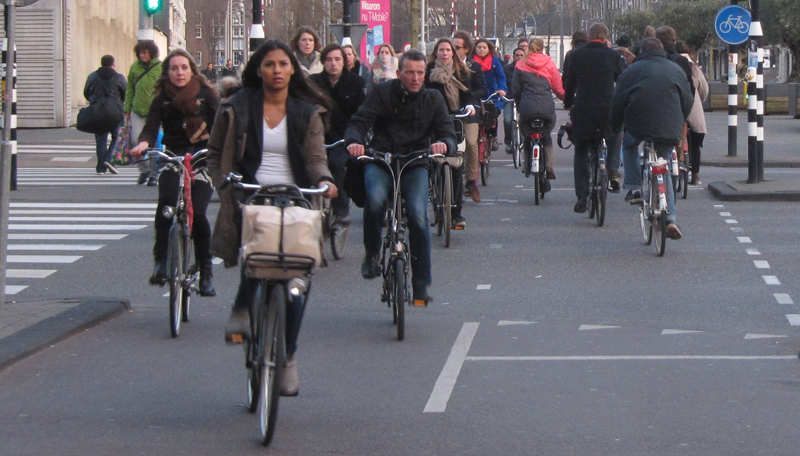


Uber: $250 a month.(Majority)
Lyft: $500 a month (Whenever Uber is too expensive)
Bus : $100 a month (1h:15 for 6 miles and 3 buses... No)
Politics and all internal conflicts aside, there is a need for these services whether we like it or not.
When I need to make a decision in the morning I take whatever is the least expensive and more convenient. I don't want to spend hours on the bus and I do not want a good chunk of my paycheck to go to simply getting to work.
Speaking with drivers everyday, I understand their frustration of driving all around town only for very small profit. Just today, I took a ride with a driver that seemed very frustrated. I didn't want to intrude but he ended up tell me how much he hates UberPool (that's what I use). 70 cents per mile, and when a second rider joins the rate goes down, and for the next even lower. We were 3 different riders.
In the riders perspective, we want the cheapest and most reliable. Sure I want to support those who work for a company that respect them but at the end of the day it is not a charity.
What is the answer in the consumer's perspective?
Edit: Formatting